Families searching for location-specific support can also review our Kochi companion service details and then continue with this guide.
Finding the right caretaker or companion for your parent's hospital visit.
Not all support options are equal. Choose based on whether your priority is cost or information.
When your elderly parent has a hospital visit in Kochi - whether it's a routine cardiology checkup, a day surgery, or an admission - someone needs to be there. You might call them a "caretaker," "helper," "attendant," or "companion." In Kochi's hospitals, this person plays a critical role: they navigate the system, coordinate information, ensure your parent is safe, and keep the family informed. This guide explains all the options for arranging support for your parent's hospital visit, the tradeoffs of each, and how to choose.
The Caretaker Question
When families say they need a "caretaker" for a hospital visit, they usually mean: someone to accompany my parent to the hospital, help them navigate the appointment or stay, and ensure they get home safely. The person filling this role is essential - not every elderly parent can manage a hospital visit alone.
Yet families are often unclear about what options exist and what tradeoffs come with each.
Option 1: A Family Member
The Option
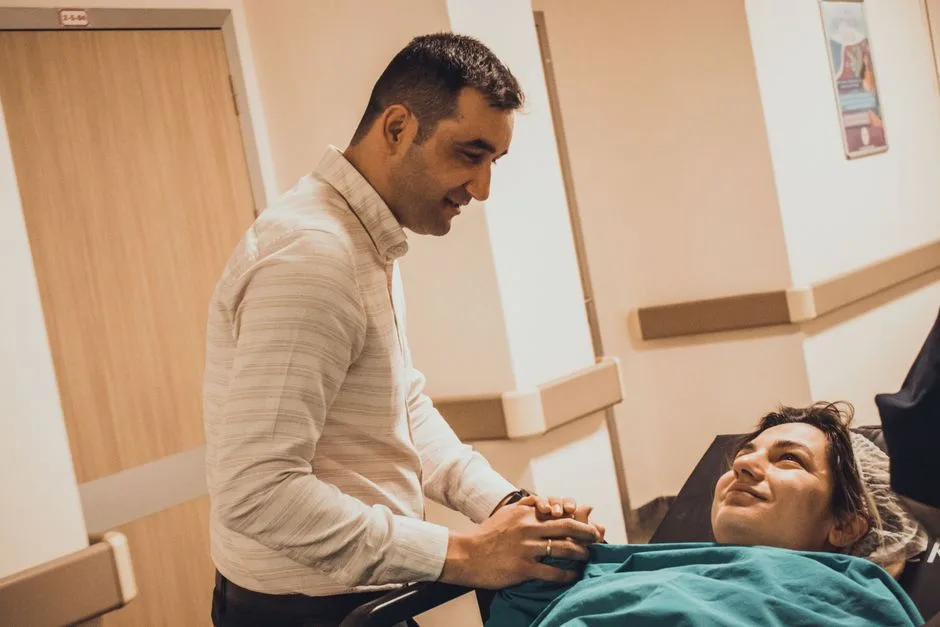
You or another family member accompanies your parent to the hospital.
Advantages
- Personal relationship - your parent feels most comfortable with family
- No cost - no financial outlay
- Family continuity - you know your parent's full history and concerns
- Instant authority - hospital staff recognize family relationships and may defer to family decisions
- No coordination - you already know your parent; no onboarding needed
Disadvantages
- Work impact - you miss work, lose income, lose productivity
- Not scalable - can't be there for every single appointment (cardiology every 3 months, check-ups, emergency visits)
- Emotional burden - managing your own stress plus your parent's anxiety
- Information gaps - even though you're family, you may miss details or misremember what the doctor said
- One-person burden - if you're the only available family member, this is unsustainable
- Coordination chaos - multiple family members have conflicting schedules
- Guilt - if you can't be there, you feel guilty
Best for: Occasional visits where one family member's schedule aligns perfectly, or when you have no other option.
Cost: $0, but hidden cost in lost work time and stress
Reliability: Depends on family member's availability and consistency
Option 2: Informal/Casual Help From Friends or Neighbors
The Option
You ask a friend, neighbor, or local contact to sit with your parent during a hospital visit.
Advantages
- Personal touch - someone your parent may know and trust
- Low cost - usually informal, no payment needed
- Community support - strengthens neighborhood ties
Disadvantages
- Unreliable - friends and neighbors have their own lives; they may cancel
- No training - they don't know hospital processes or how to advocate for your parent
- Awkward to ask - creates social obligation; hard to ask repeatedly
- Not scalable - you can't build a recurring system on friend favors
- Limited accountability - if something goes wrong, it's awkward
- No documentation - no one takes notes on what the doctor said
Best for: One-off situations where a trusted friend happens to be available.
Cost: $0 (though you may feel obligated to reciprocate)
Reliability: Very low
Option 3: Hired Caretaker/Attendant From Local Agencies or Ads
The Option
You hire a person through a local agency (Justdial, Sulekha, Urban Company), classified ads, or word-of-mouth to sit with your parent during a hospital visit or stay.
Advantages
- Affordable - typically ₹300-₹800/day or ₹50-₹150/hour
- Available - easier to find someone willing to work
- Someone present - at least your parent isn't alone
- Flexible scheduling - can often arrange for specific dates/times
- Can do chores - may help with errands, pharmacy runs, meal coordination
Disadvantages
- Highly variable quality - no standardized training or credentials
- Minimal vetting - most have limited or no background verification
- No hospital knowledge - doesn't know OPD processes, hospital protocols, or how to navigate
- No medical understanding - can't take meaningful notes or ask clarifying questions
- No coordination - won't proactively update you on what's happening
- Consistency issues - different people, different attitudes, different reliabilities
- Limited accountability - if something goes wrong, there's no organization backing them
- Language barriers - may not speak your parent's language fluently
- Information loss - what the doctor said may or may not be accurately relayed
Best for: Multi-day hospital stays where you need someone to sit with your parent overnight or provide hands-on personal care.
Cost: ₹300-₹800/day, or ₹50-₹150/hour
Reliability: Unpredictable (depends entirely on the individual)
Option 4: Professional Hospital Companion Service (Presenza)
The Option
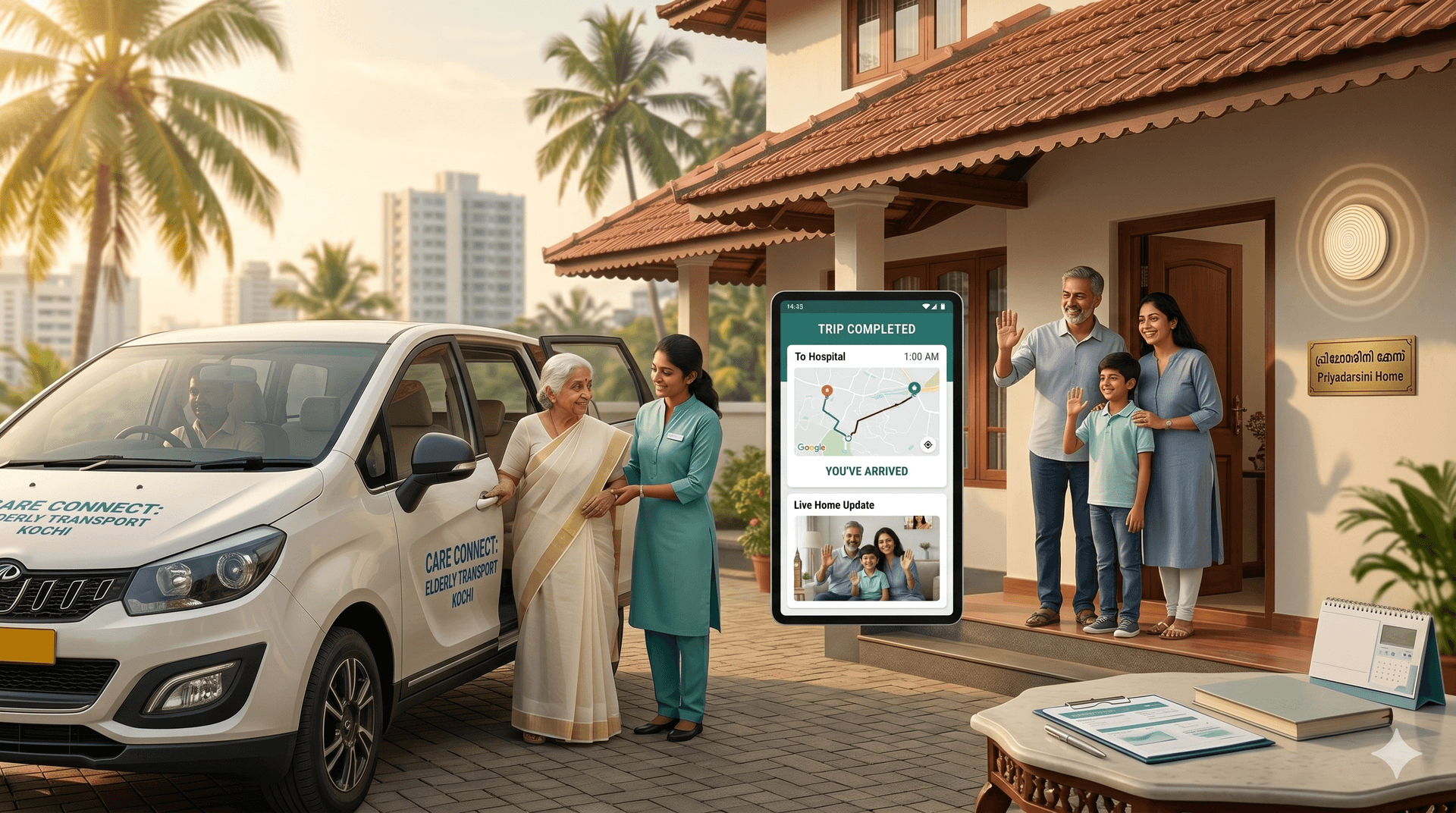
A trained, vetted, supervised professional accompanies your parent for the hospital visit. Their role: navigate the hospital, take notes, ask clarifying questions, provide real-time updates, and deliver complete post-visit documentation.
Advantages
- Thorough vetting - background verification, identity check, employment history
- Professional training - hospital protocols, emergency response, health literacy
- Hospital navigation - knows Kochi hospitals' layouts and processes
- Information accuracy - takes clear notes during consultations, asks clarifying questions
- Real-time updates - you get WhatsApp updates at every key moment
- Complete documentation - post-visit summary within 30 minutes (findings, medications, restrictions, follow-up)
- Accountability - organizational responsibility, senior lead monitors every visit
- Language match - companion matched to your parent's language preference
- Consistency - same standards every time
- Reliability - shows up, prepared, professional
- Medical context - if your parent has cardiac disease or dementia, matched accordingly
Disadvantages
- Higher cost per visit - ₹1,500-₹3,000+ depending on visit type (more expensive than casual attendants, but structured pricing)
- Single-visit focused - designed for OPD visits and single appointments, not multi-day stays
- Not for overnight sitting - doesn't provide overnight hospital stays
Best for: Single hospital visits (OPD consultations, diagnostic tests, specialist reviews, day procedures) where you need reliable, accurate information and peace of mind.
Cost: ₹1,500-₹3,000+ per visit (transparent, per-visit pricing)
Reliability: High (organizational accountability)
The Comparison Matrix
| Need | Family Member | Friends/Neighbors | Hired Caretaker | Professional Companion | |---|---|---|---|---| | Occasional visit (1-2x/year) | ✓ Best if available | ✓ Maybe | ○ Overkill | ○ Maybe overkill | | Recurring visits (monthly+) | ✗ Unsustainable | ✗ Can't ask repeatedly | ○ Could work | ✓ Best option | | Multi-day admission | ✗ Can't miss that much work | ✗ Not realistic | ✓ Best option | ✗ Not designed for this | | Overnight in-hospital sitting | ✗ Too burdensome | ✗ Inappropriate to ask | ✓ Good option | ✗ Not provided | | Hospital navigation expertise | ✗ Usually not | ✗ No | ✗ Minimal | ✓ Yes | | Medical information accuracy | ○ Depends on person | ✗ Low | ✗ Low | ✓ High | | Real-time family updates | ✗ You have to call | ✗ Depends on person | ✗ Low | ✓ Always | | Post-visit documentation | ✗ Usually not | ✗ No | ✗ Minimal | ✓ Complete summary | | Accountability | N/A (family) | ✗ None | ✗ Low | ✓ High | | Cost | ₹0 (hidden time cost) | ₹0 | ₹300-₹800/day | ₹1,500-₹3,000/visit |
Combining Options
Most families don't choose just one option. Instead:
- For hospital visits (OPD, tests, consultations): Professional companion - gives you reliable information and peace of mind
- For admissions (multi-day stays): Combination of professional companion for the admission day + hired caretaker for overnight sitting
- For emergencies: Whoever is available immediately, then professional companion if it turns into an extended stay
Decision Framework
Ask Yourself These Questions
-
How often does my parent need hospital visits?
- Once a year → Family member when available; companion for critical visits
- Monthly → Professional companion for appointments; attendant if admission needed
- Multiple times per month (e.g., dialysis) → Professional companion system
-
How much information do I need?
- Just need to know my parent got there safely → Any option works
- Need complete medical details → Professional companion
- Need documentation for follow-up coordination → Professional companion
-
How much can I personally be there?
- Can always be there → Family option works
- Can be there sometimes → Combination approach (you + professional companion)
- Can't be there regularly → Professional companion + attendant for admissions
-
How anxious is my parent?
- Comfortable going alone (rare) → Any option works
- More comfortable with someone → Any option works
- Anxious, confused, or hearing-impaired → Professional companion trained for this
-
What's my biggest priority?
- Cost → Hired caretaker or family
- Reliability → Professional companion
- Information accuracy → Professional companion
- Personal comfort → Family member
The Real-World Model Most Families Adopt
Families managing elderly parents' hospital care in Kochi typically use:
- Professional companion for hospital visits - ensures accurate information, real-time updates, complete post-visit documentation
- Hired caretaker for admissions - cost-effective overnight sitting and in-hospital presence
- Family member involvement - remaining engaged, not bearing the entire operational burden
This balances cost, quality, reliability, and emotional wellbeing.
Making Your Decision
Start by answering: What problem am I trying to solve?
-
If: My parent needs someone to accompany them to OPD appointments and I need to stay informed
-
Then: Professional hospital companion service
-
If: My parent is being admitted for surgery and needs overnight sitting
-
Then: Hired caretaker + professional companion for the admission day
-
If: I have time and my parent wants family with them
-
Then: Family member, with professional companion as backup when family can't be there
-
If: Cost is the only consideration and the visit is low-risk
-
Then: Hired caretaker (but understand the tradeoffs)
In Kochi, the emerging model for professional families is: use professional companions for the appointments (where information matters), use caretakers for admissions (where presence matters), and rely on family for emotional support (where relationship matters).
This three-layer approach ensures your parent is never alone, you're always informed, and the financial burden is balanced across the family.
Professional companions deliver both reliability and information.
Vetted, trained, supervised, and accountable. Real-time updates. Complete post-visit documentation.
Frequently Asked Questions
Arrange professional caretaker support for your parent in Kochi.
Message us on WhatsApp to book. We'll match a companion and send their profile 24 hours before the visit.
Presenza's care team writes practical guides for families managing elderly hospital visits and remote healthcare coordination.
Get our hospital visit checklist for families.
A practical guide to preparing for appointments, questions to ask doctors, and what to document. Free. No spam.