Families searching for city-specific service details can review our Kochi or Bangalore companion service pages.
Cataract surgery restores vision and independence.
We help families prepare for surgery and manage post-operative recovery at home.
Cataract surgery is one of the most commonly performed surgical procedures in the world. It is also one of the safest, with excellent outcomes even in very elderly patients. For an elderly parent struggling to see clearly, cataract surgery can be transformative - restoring independence, improving quality of life, and reducing fall risk. Yet families often approach the surgery with anxiety, uncertain about what to expect, what the recovery will be like, and when their parent will see improvement.
Understanding cataract surgery step-by-step removes much of this anxiety. This guide walks through preparation, the surgical process, recovery timeline, and what constitutes normal recovery versus concerning symptoms.
Understanding Cataracts
A cataract is clouding of the eye's natural lens. The lens sits behind the iris and pupil and focuses light onto the retina. As cataracts develop, the clouding prevents light from passing clearly through, and vision becomes blurry and faded.
Early cataracts may cause only mild symptoms: slightly blurry vision, glare sensitivity (particularly when driving at night), or colors appearing faded. As cataracts progress, vision deteriorates significantly - reading becomes difficult, television becomes hard to see, and safe driving becomes impossible. At this stage, surgery is the only effective treatment.
Cataracts develop gradually over years. They are not painful. They do not progress overnight. If your parent has had blurry vision for months or years and is now considering surgery, the timing is their choice - there is no rush unless driving is unsafe.
When Is Surgery Recommended?
Surgery is recommended when:
- A cataract is significantly limiting your parent's daily activities (reading, watching television, driving, household tasks)
- Symptoms are affecting quality of life
- Your parent and the eye doctor agree it's time
Surgery is not recommended just because a cataract is visible or "ripe." The decision is based on functional impact, not appearance. Some patients with very dense cataracts choose not to have surgery. Some with mild cataracts choose surgery because they want to drive or read more comfortably.
There is no medical urgency to cataract surgery in the vast majority of cases. The only exception is if a cataract is so dense that the doctor cannot see the retina to diagnose other eye diseases (like glaucoma or diabetic retinopathy). In this case, surgery may be recommended to allow proper eye examination.
Before Surgery: Preparation
Schedule pre-operative evaluation: The ophthalmologist performs a comprehensive eye exam 1–2 weeks before surgery. This includes vision testing, measurement of eye pressure (glaucoma screening), and imaging to measure the eye's shape and length.
Biometry: This is precise measurement of the eye to determine what strength intraocular lens (IOL) implant to use. The goal is to implant a lens that will result in the desired vision (distance vision, or adjusted for reading, depending on your parent's preference).
Choose IOL type: Standard monofocal lenses provide clear distance vision. Patients typically still need reading glasses after surgery. Multifocal or extended-depth-of-focus lenses can reduce the need for glasses but are more expensive and may cause some glare or halos. Discuss options with the surgeon.
Stop certain medications: Medications that affect bleeding (aspirin, warfarin, other blood thinners) may need to be stopped 1 week before surgery. The eye doctor will advise. Do not stop any medication without doctor approval.
Arrange transportation: Your parent cannot drive home after surgery due to sedation and dilated pupils. Arrange transportation with a family member or companion.
Plan for recovery: Arrange time off work if needed. Plan for gentle activity only for 1 week after surgery. Ask the surgeon what activities are safe.
Prepare the home: Arrange your parent's recovery space with:
- Clean pillows and bedding
- Glasses if your parent needs them for reading (until recovery is complete)
- Phone and remote control within reach
- Night light in bathroom
- Any prescribed eye drops in the refrigerator if required
The Day of Surgery
Early morning arrival: Most cataract surgeries are outpatient procedures done early in the day. Your parent should arrive 1–2 hours before the scheduled surgery time.
NPO (nothing to eat or drink): Typically, your parent should not eat or drink for 6 hours before surgery. The surgeon will advise specifically.
Take or skip medications: Ask whether your parent should take their morning medications. Some should be taken (blood pressure medication, heart medication), others should be skipped.
Comfortable clothing: Loose, comfortable clothing is best. Your parent will change into surgical clothes.
Bring insurance card and ID: You'll need these at registration.
The Surgery Process
Pre-operative preparation (30 minutes): Your parent is taken to the pre-operative area. IV is placed. Vital signs are checked. Eye drops are instilled repeatedly to dilate the pupil fully.
Transfer to operating room: Your parent is transferred to the operating room.
Anesthesia: The eye is numbed with local anesthetic drops. Additional sedation is given to keep your parent comfortable and relaxed but conscious. Your parent remains awake but sedated and does not feel pain.
Surgical draping: The operative eye is cleaned and covered with sterile drapes. Everything is prepared for surgery.
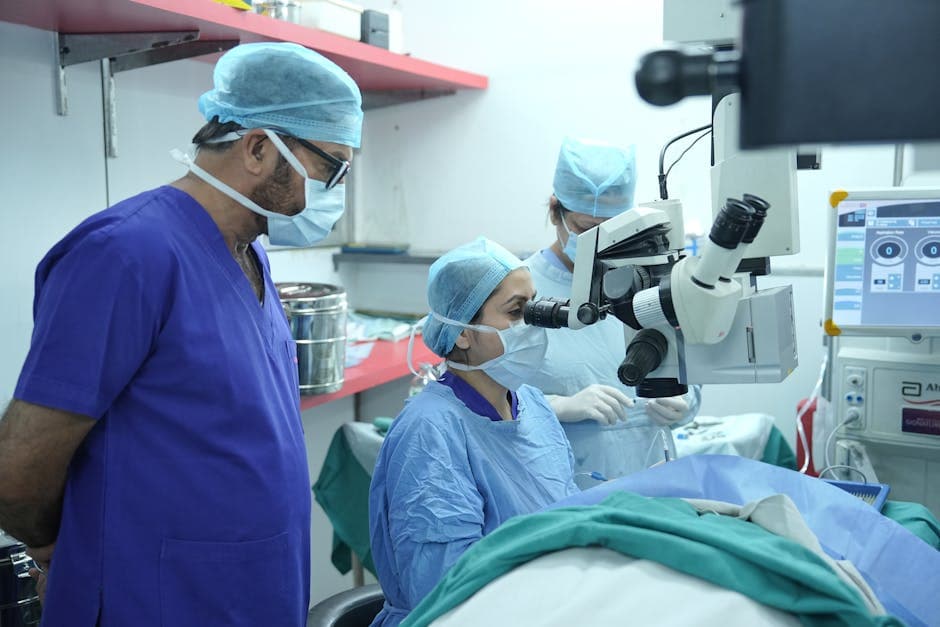
Surgery (10–15 minutes): The surgeon makes a tiny incision (usually self-sealing, no stitches needed). The cloudy lens is emulsified (broken into small pieces) using ultrasound (phacoemulsification). The pieces are removed. The new intraocular lens is inserted. The incision is closed (usually self-sealing).
Recovery room (1–2 hours): Your parent wakes up from sedation. Vital signs are monitored. The eye is checked. Vision is surprisingly clear immediately - even on day 1, your parent will notice improvement.
Immediately After Surgery: The First Few Hours
Vision: Expect immediate improvement, though vision may be slightly blurry as swelling settles. Don't be surprised if vision is actually quite good within hours.
Comfort: The eye should feel comfortable. Some mild scratchy feeling is normal. Severe pain is not normal - report it immediately.
Discharge instructions: Before leaving, your parent receives written discharge instructions covering:
- Eye drop medications (type, frequency, duration)
- Activity restrictions
- What to avoid (water in the eye, heavy lifting, strenuous activity)
- When to return for follow-up
- Warning symptoms
Transportation home: A responsible adult drives your parent home. Your parent should rest.
Home care: Upon arriving home, your parent should rest. Use any prescribed eye drops as directed (usually 4 times daily for 2–4 weeks post-operatively).
Recovery Timeline
Day 1–3: Vision improves dramatically. Swelling is normal and will decrease. Your parent may see some floaters or shadowy areas - these are normal. Most patients see better by the second day than before surgery.
Week 1: Vision continues improving. Some fluctuation is normal. Some halo around lights (especially at night) is normal. Your parent should avoid water in the eye (no shower splashing), avoid dust/dirt, and avoid rubbing the eye.
Week 2–4: Vision stabilises. Swelling resolves. Most patients have clear vision by 3–4 weeks. Some residual dryness or occasional floaters may persist.
Month 2 onwards: Full vision stability. Any further improvement is gradual.
Activity Restrictions After Surgery
Immediate (first 1 week):
- Avoid water in the eye (careful showering, avoid swimming)
- Avoid dust or dirt exposure
- Avoid rubbing the eye
- Avoid strenuous exercise or heavy lifting
- Avoid reading or close work if it strains the eye
Weeks 2–4:
- Gradually return to normal activities
- Can resume gentle exercise (walking)
- Can resume reading
- Can resume most daily activities
- Still avoid heavy lifting or strenuous sports
After 1 month: Most restrictions are lifted. Return to normal activities as tolerated.
Post-Operative Medications
Eye drops: Usually prescribed 4 times daily for 2–4 weeks. Types include:
- Antibiotic drops (prevent infection)
- Anti-inflammatory drops (reduce swelling and inflammation)
- Lubricating drops (comfort)
Systemic medication: Sometimes oral medications are prescribed (usually pain management or anti-inflammatory).
Medication timing: If your parent is on multiple eye drops, there are specific timing intervals between them. Ask the pharmacist or surgeon about correct spacing.
Warning Symptoms: When to Call
Call during business hours if:
- Vision becomes more blurry instead of improving
- Persistent eye pain (not just discomfort)
- Increased redness
- Discharge from the eye
- Floaters or flashes of light
Call immediately or go to the ER if:
- Severe pain
- Sudden vision loss
- Swelling that causes eye closure
- Signs of serious infection (fever, severe swelling)
These symptoms are rare with modern cataract surgery, but report them promptly if they occur.
Vision After Surgery: Glasses and Contacts
Most patients need glasses for reading or close work after cataract surgery, even with monofocal lenses. Some need glasses for distance vision if the implanted lens power is slightly different from the intended power (this is very rare with modern biometry).
Vision is typically stable within 4–6 weeks, allowing for final glasses prescription at that time.
If your parent chooses multifocal lenses, glasses may not be needed for most activities, though some patients still prefer reading glasses.
Second Eye Surgery
If your parent has cataracts in both eyes, typically surgery on the second eye is scheduled 2–4 weeks after the first eye. This allows the first eye to heal fully and allows comparison of vision between the two eyes.
Driving After Cataract Surgery
Your parent cannot drive immediately after surgery due to sedation, dilated pupils, and visual adjustments.
The ability to drive depends on vision. The legal requirement for driving is vision of 20/40 in the better eye. Most patients achieve this within 1 week post-operatively.
However, some patients prefer to wait 2–3 weeks when vision has fully stabilised and the eye has fully healed before resuming driving.
Ask the ophthalmologist: "When is it safe for my parent to drive?"
Cataract Surgery in Kochi
Cataract surgery is widely available at all major hospitals in Kochi: Aster MIMS, Rajagiri, Lakeshore, and Amrita have excellent eye departments. Specialised eye hospitals like Chaithanya Eye Hospital offer very high volumes of cataract surgery.
For families managing elderly parent care from a distance, our companion service for elderly parents can arrange the pre-operative evaluation, accompany your parent through surgery, provide post-operative care at home, manage eye drop administration, and monitor recovery.
Costs
Cataract surgery costs in Kochi vary:
- Government hospital: ₹20,000–40,000 total
- Private hospital with standard IOL: ₹80,000–150,000
- Private hospital with premium IOL: ₹200,000–300,000+
Insurance coverage varies. Check your parent's policy for coverage of the procedure and IOL type.
This article is for informational purposes only. Decisions about cataract surgery should be made with your parent's ophthalmologist. For our editorial standards, see our editorial policy.
Modern cataract surgery has minimal downtime and excellent outcomes.
We guide families through the entire surgical journey with confidence.
Frequently Asked Questions
Help preparing your parent for cataract surgery?
Contact us and we will help coordinate surgery and manage recovery.
Presenza's care team writes practical guides for families managing elderly hospital visits and remote healthcare coordination.
Get our hospital visit checklist for families.
A practical guide to preparing for appointments, questions to ask doctors, and what to document. Free. No spam.