Families searching for city-specific service details can review our Kochi or Bangalore companion service pages.
The emergency room is overwhelming without preparation.
We help families navigate ER visits, advocate for their parent, and understand what happens next.
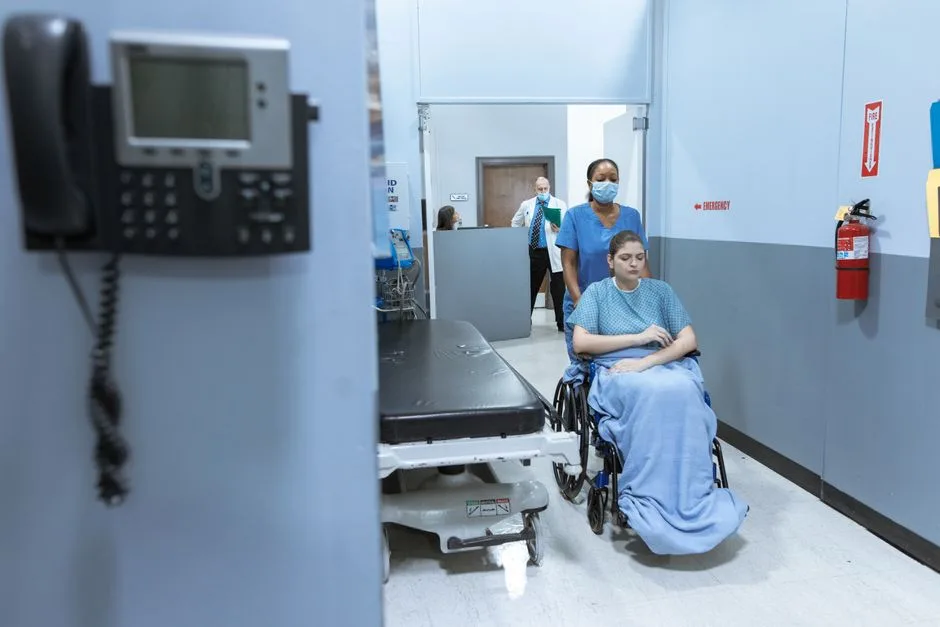
The emergency room is chaotic, loud, and frightening - especially for elderly patients experiencing acute illness or injury. Families often feel helpless, uncertain about what is happening, and overwhelmed by the number of people and procedures. Understanding how the emergency room works, what to expect, and how families can advocate for their parent transforms the experience from disorienting to manageable.
This guide explains emergency department operations, what happens from arrival through disposition (admission, discharge, or transfer), and how families can support elderly parents in the ER.
When to Go to the Emergency Room
Not every medical problem requires the emergency room. Understanding when emergency care is necessary prevents unnecessary ER visits and allows the ER to focus on truly urgent cases.
Go to the emergency room immediately for:
- Chest pain or pressure, especially with shortness of breath, nausea, or arm pain
- Severe shortness of breath
- Difficulty speaking, facial drooping, arm weakness, or slurred speech (signs of stroke)
- Severe allergic reaction (throat swelling, difficulty breathing, rash spreading rapidly)
- Severe abdominal pain
- Uncontrollable bleeding
- Severe trauma or falls with altered consciousness
- Sudden severe headache
- Difficulty urinating or passing stool with severe pain or distension
- Poisoning or overdose
Go to the emergency room within a few hours for:
- Moderate abdominal pain lasting more than a few hours
- Fever with confusion or inability to stay awake
- Uncontrolled vomiting
- Signs of severe infection (very high fever, severe pain, elevated heart rate)
- Inability to move a limb or severe joint pain suggesting fracture
- Severe burns
Call your doctor or go to urgent care for:
- Mild chest discomfort that goes away with rest
- Mild shortness of breath
- High fever without confusion
- Mild to moderate pain
- Cuts requiring stitches
- Possible fractures without severe deformity
If uncertain, call the ambulance or go to the ER. It is better to be evaluated and sent home than to miss a true emergency.
Getting to the Emergency Room
Call 112 for ambulance: If your parent is having a serious emergency (severe chest pain, stroke, severe trauma), call 112 immediately. Do not drive the patient yourself. Ambulances are staffed with paramedics who can begin treatment during transport. Driving yourself delays professional care.
Go to nearest hospital with ER: If your parent has mild-to-moderate symptoms, driving yourself is acceptable. Go to the nearest hospital with a 24-hour emergency department.
Bring documentation: If possible, bring:
- Insurance card and ID
- Current medication list
- Known allergies
- Recent medical records (if available)
- Medical history summary
If there is no time (severe symptoms), go immediately without documents. Bring them later.
At the Emergency Room: The Process
Most ERs follow a similar workflow:
Triage (5–10 minutes): A nurse assesses how urgent your parent's condition is and assigns a priority level. Life-threatening conditions (severe chest pain, difficulty breathing, altered consciousness) are seen immediately. Less urgent conditions have longer waits. This system ensures the sickest patients are seen first.
Registration (5–10 minutes): While waiting, registration staff collect insurance and demographic information. Be prepared to answer basic questions about your parent's condition, medications, allergies, and medical history.
Waiting area: Depending on priority and ER volume, there may be a wait of 30 minutes to several hours before the patient is called back to the treatment area. Long waits are frustrating but normal in busy ERs.
Examination room: The patient is taken to a treatment area (curtained bed or private room depending on volume). A nurse inserts an IV, takes vital signs, and performs initial assessment.
Doctor evaluation (10–30 minutes): The ER doctor sees the patient, takes a history, performs physical examination, and orders tests if needed.
Tests and imaging: Depending on the diagnosis, blood tests, X-rays, ultrasound, CT, or ECG may be ordered. Results take 30 minutes to several hours depending on test type.
Results and decision: Once tests are back, the ER doctor discusses results with the patient and family and determines whether the patient will be admitted to the hospital, transferred to another hospital, or discharged home.
Total ER time is usually 2–4 hours for straightforward cases, longer for complex cases or busy departments.
Advocating for Your Parent in the ER
The ER is fast-paced and fragmented. Multiple staff members may ask the same questions repeatedly. Families who advocate actively improve the quality of care.
Be present: Whenever possible, stay with your parent in the ER. Elderly patients may not clearly communicate symptoms or hear explanations. Your presence ensures the doctor understands the full picture.
Communicate the main problem clearly: Early in the evaluation, tell the doctor: "My parent came in with chest pain. They also have diabetes and take these medications. Here are their allergies." Clear communication up front improves assessment.
Correct misinformation: If staff misunderstand your parent's history (wrong medication, wrong past medical history, misheard symptom), politely correct it. "Actually, my parent doesn't take that medication - they take this one."
Ask questions if unclear: If you don't understand what the doctor said, ask again. "Can you explain in simpler terms?" is appropriate.
Take notes: Write down what the ER doctor says about the diagnosis, what tests were done, and what happens next. You will forget otherwise.
Ask about disposition: Before your parent is discharged, ask:
- What is the diagnosis?
- What tests were done?
- What were the results?
- Why is my parent being sent home?
- What symptoms should my parent watch for?
- Should my parent follow up with any doctor?
- What medications should my parent take?
When Your Parent Is Admitted to the Hospital
If the ER doctor decides your parent needs hospital admission:
Ask which hospital unit: Will your parent go to a regular hospital ward or intensive care? Understanding this helps you know where to find them and what level of monitoring they will receive.
Get contact information: Ask how to reach the ward and get your parent's hospital room number.
Ask about visiting hours: When can family visit?
Ask about care plan: What tests or treatments will happen in hospital? What is the expected length of stay?
Bring essentials: Bring toiletries, change of clothes, medications, glasses/hearing aids if needed.
When Your Parent Is Discharged from the ER
If your parent is sent home:
Get written discharge instructions: Do not leave the ER without:
- Diagnosis
- Medications prescribed (written prescriptions)
- Discharge instructions (activity restrictions, dietary changes)
- Warning symptoms that require urgent follow-up
- Follow-up appointment information
- Contact information for questions
Fill prescriptions: Get medications filled before going home.
Follow discharge instructions: Implement recommended activity restrictions, dietary changes, and medication schedule immediately.
Follow up with doctor: Go to the follow-up appointment scheduled in the ER.
Managing Anxiety and Stress in the ER
The ER is stressful for both elderly patients and families. Strategies to manage anxiety:
Stay calm: Your parent will be calmer if you are calm. Speaking softly and reassuring your parent reduces anxiety.
Explain what is happening: "The nurse is putting in an IV so they can give you fluids." Understanding reduces fear.
Stay present: Your presence is reassuring.
Bring comfort items: A blanket from home or a family member's presence provides comfort.
Manage your own stress: Take breaks if needed. Call other family members to share the burden.
Common ER Mistakes to Avoid
Mistake: Driving yourself with severe symptoms instead of calling the ambulance. Fix: Call 112 for chest pain, stroke, difficulty breathing, or severe trauma.
Mistake: Not bringing medication list and relying on memory to tell the doctor what medications you take. Fix: Bring written medication list or take photographs of medication bottles.
Mistake: Assuming the ER doctor knows your parent's past medical history. Fix: Clearly communicate major medical conditions and surgeries.
Mistake: Leaving without written discharge instructions. Fix: Get discharge paperwork and review it before leaving.
Mistake: Feeling unable to ask questions or advocate because you don't want to "bother" the staff. Fix: The ER staff expects questions. Advocating for your parent is your responsibility.
Emergency Care in Kochi
All major hospitals in Kochi (Aster MIMS, Rajagiri, Lakeshore, Amrita) have 24-hour emergency departments. For life-threatening emergencies, the nearest hospital with an ER is the appropriate choice. For less urgent problems that have been going on for days, you may choose based on hospital reputation.
For families managing elderly parent care from outside Kochi and uncertain whether symptoms require the ER, our companion service for elderly parents can assess your parent, advise whether ER care is needed, and accompany to the ER if necessary.
This article is for informational purposes only. Medical emergencies should be evaluated by qualified emergency physicians. For our editorial standards, see our editorial policy.
Clear communication and advocacy improve ER care significantly.
We help you stay informed and ensure your parent's needs are met.
Frequently Asked Questions
Need help managing an ER visit?
Contact us and we will support your parent through the ER process.
Presenza's care team writes practical guides for families managing elderly hospital visits and remote healthcare coordination.
Get our hospital visit checklist for families.
A practical guide to preparing for appointments, questions to ask doctors, and what to document. Free. No spam.