Families searching for city-specific service details can review our Kochi or Bangalore companion service pages.
Eye health is easy to overlook until vision changes.
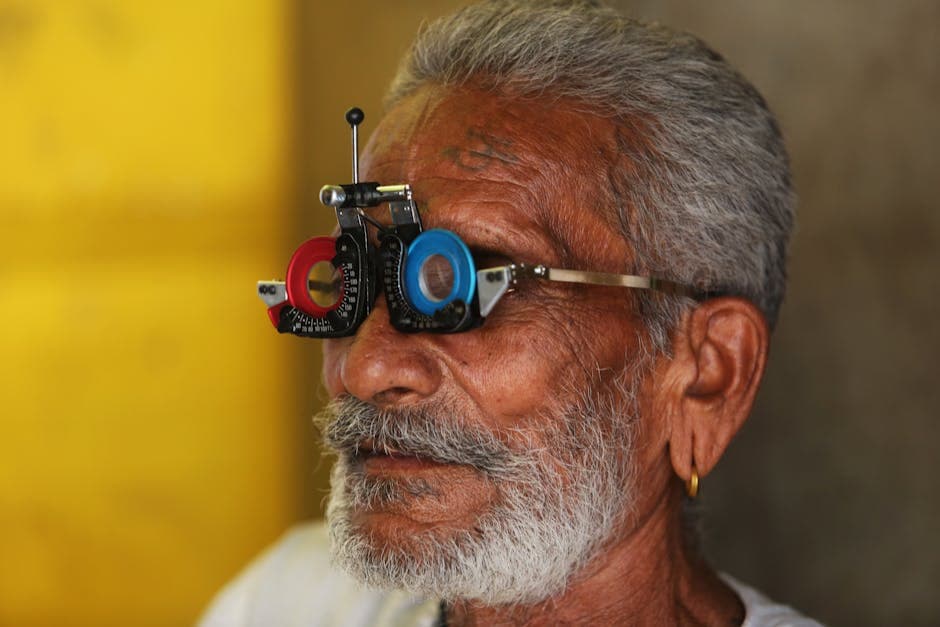
We coordinate eye examinations and help families understand ophthalmology recommendations.
Vision loss in elderly parents is one of the most common and most preventable drivers of loss of independence. A parent who cannot see clearly cannot manage their own medications, cannot read prescriptions or reports, cannot recognise faces, and cannot navigate their own home safely. Falls increase dramatically when vision deteriorates. Social withdrawal follows.
Yet routine eye care is consistently deprioritised by families managing multiple health concerns. The cardiac condition gets the specialist visits. The diabetes gets the quarterly checks. The eyes - whose declining health is progressing quietly and without pain in many conditions - get attention only when the parent reports that things look blurry.
By then, in conditions like glaucoma, significant irreversible damage may already have occurred. This guide tells you what to watch for, what annual checks to schedule, and how to navigate ophthalmology care in Kochi.
The Normal Changes in Ageing Eyes
Not every change in vision with age is a disease. Several changes are the expected consequence of the eye's ageing and can be managed without intervention beyond updated glasses.
Presbyopia - the loss of the eye's ability to focus on close objects - typically begins in the mid-forties and affects virtually everyone. Reading glasses or bifocals address it. If your parent is squinting to read their mobile phone or holding the newspaper at arm's length, they need updated reading glasses, not necessarily a specialist appointment. However, if this change is rapid, unequal between eyes, or accompanied by other symptoms, it warrants evaluation.
Reduced contrast sensitivity makes it harder to distinguish objects against similarly coloured backgrounds. This is a normal ageing change that affects driving at night, navigating stairs, and reading in low light. Good lighting in the home is the most important compensatory measure.
Increased glare sensitivity, floaters (dark spots or strings that drift across the visual field), and taking longer to adjust when moving between bright and dark environments are all common age-related changes. Sudden new floaters accompanied by flashes of light, however, are not normal and require prompt evaluation for retinal problems.
Understanding what is normal versus what signals disease helps you respond proportionately - not dismissing everything as "just old age," but not causing unnecessary alarm for expected changes either.
Cataracts: The Most Common Eye Condition After 60
A cataract is a clouding of the eye's natural lens, which sits behind the iris and pupil. Nearly everyone develops cataracts if they live long enough. The World Health Organization estimates cataracts cause approximately 51% of world blindness, most of which is avoidable through timely surgery.
Early cataracts cause mild blurring, increased glare sensitivity (particularly when driving at night), and a gradual fading of colours. As cataracts progress, the clouding increases and vision deteriorates significantly despite updated glasses. At this stage, surgery is the only effective treatment.
Cataract surgery is one of the most performed surgeries in the world and one of the safest. The cloudy lens is removed and replaced with a clear artificial intraocular lens (IOL) implant. Most cataract surgeries in Kochi are done under local anaesthesia with mild sedation, take approximately fifteen to thirty minutes, and allow the patient to return home the same day.
The decision to operate is made based on how much the vision impairment is affecting the patient's daily life, not on how the cataract looks under a slit lamp. A cataract that significantly limits reading, watching television, or moving around safely warrants surgery sooner. A cataract that is early and not yet limiting function can be monitored with annual checks.
Post-operative care requires antibiotic and anti-inflammatory eye drops for four to six weeks, avoiding rubbing the eye, and protecting the eye from water and dust during the initial healing period. Most patients notice dramatically improved vision within a week.
Glaucoma: The Silent Thief of Vision
Glaucoma is a group of conditions characterised by damage to the optic nerve, usually (but not always) associated with elevated pressure inside the eye (intraocular pressure or IOP). It is the second leading cause of blindness worldwide and the most common cause of irreversible blindness.
What makes glaucoma particularly dangerous is that it is painless and causes no symptoms until a significant portion of the visual field has been lost. Peripheral vision is affected first, which is the hardest type of vision loss to notice - we naturally compensate for peripheral vision loss by turning our heads. By the time a patient notices that something is wrong with their vision, they may have lost thirty to fifty percent of their visual field permanently.
This is why glaucoma screening through regular eye examinations is essential for anyone over 60, and for anyone at elevated risk (strong family history of glaucoma, diabetes, high myopia) from an earlier age.
Open-angle glaucoma (the most common type) is managed primarily with eye drops that reduce intraocular pressure. These must be used every day, indefinitely. Missing doses allows pressure to rise and damage to continue. This is a medication adherence issue that is easy to overlook when a patient has multiple medications for multiple conditions - the eye drops must be part of the daily routine with the same consistency as oral medications.
If eye drops do not achieve sufficient pressure reduction, laser treatment (SLT or selective laser trabeculoplasty) or surgical drainage procedures may be considered. The cardiologist, nephrologist, or other specialist managing your parent's systemic conditions should be aware of glaucoma medications because some interact with systemic blood pressure or cardiac medications.
Diabetic Retinopathy: The Eye Complication of Diabetes
Diabetic retinopathy is damage to the blood vessels in the retina caused by chronically elevated blood glucose. It is one of the leading causes of blindness in working-age and elderly adults in India, and it is directly preventable through good blood glucose control and regular eye screening.
Every diabetic patient should have a dilated fundus examination (a detailed examination of the retina with the pupil dilated) at least annually, and more frequently if retinopathy has already been detected. This examination should be done by an ophthalmologist or a trained optometrist, not simply a vision screening. It specifically looks for microaneurysms (tiny haemorrhages in retinal vessels), new blood vessel formation (neovascularisation, a sign of advanced disease), and macular oedema (swelling affecting central vision).
Early diabetic retinopathy causes no visual symptoms. Advanced diabetic retinopathy can cause sudden visual loss. This is why the annual examination must happen even when the patient reports no visual problems.
The most important intervention for diabetic retinopathy is tight blood glucose control. An HbA1c consistently above 8% dramatically increases the rate of retinopathy progression. For patients whose retinopathy has progressed to the vision-threatening stage, laser photocoagulation or intravitreal injections (injections into the eye of medications that prevent abnormal vessel growth) are the standard treatments.
If your parent has diabetes and has never had a dilated fundus examination, scheduling this is a priority.
Age-Related Macular Degeneration (AMD)
Age-related macular degeneration affects the macula - the central part of the retina responsible for the fine, detailed vision used for reading, recognising faces, and watching television. It is most common in adults over 70 and is a leading cause of severe visual impairment in this age group.
Dry AMD (the more common form) progresses slowly. Drusen (small protein deposits) form under the retina and gradually degrade macular function. There is currently no approved medical treatment that reverses dry AMD, but high-dose antioxidant supplements (specific formulations studied in the AREDS2 trial) have been shown to slow progression in intermediate and advanced dry AMD.
Wet AMD (less common but more serious) involves abnormal blood vessel growth under the retina. These vessels leak fluid and blood, causing rapid, severe central vision loss. Wet AMD is treated with intravitreal injections of anti-VEGF medications, which have transformed outcomes from this condition. Treatment must begin promptly - delays of even a few weeks in wet AMD can cause permanent central vision loss.
The warning sign for AMD is distortion of straight lines - door frames appearing wavy, text appearing bent. The Amsler grid (a simple grid of straight lines that can be printed or viewed on a phone) is used to monitor for this. If lines appear distorted or a central area appears missing or blurry, an urgent ophthalmology appointment is warranted.
Annual Eye Examinations: What Should Be Assessed
For elderly parents, particularly those with diabetes, hypertension, or a family history of glaucoma, an annual comprehensive eye examination is essential. What a comprehensive examination should include:
Visual acuity measurement: how clearly the patient sees at distance and near, with and without current glasses. Updated glasses prescription if needed.
Intraocular pressure measurement: the primary glaucoma screening test. A normal reading is below 21 mmHg, but glaucoma can occur at lower pressures too - the pressure reading alone is not sufficient. A full glaucoma assessment includes optic nerve evaluation.
Optic nerve evaluation: assessed through the dilated pupil with an ophthalmoscope or slit lamp. Changes in the optic nerve cup-to-disc ratio are the primary indicator of glaucoma damage.
Dilated fundus examination: essential for diabetic retinopathy screening and AMD detection. Cannot be adequately performed without dilating the pupils.
The examination should be done by an ophthalmologist or well-trained optometrist. Supermarket-style "eye tests" that check only visual acuity and refraction are not sufficient for elderly patients at risk of the conditions described above.
Navigating Eye Care in Kochi
Kochi has several ophthalmology facilities equipped for the full range of eye conditions in elderly patients. Chaithanya Eye Hospital is a specialist eye hospital with strong infrastructure for cataract surgery, glaucoma management, and retinal conditions. Aster MIMS and Rajagiri Hospital have ophthalmology departments that handle most conditions with referral pathways to specialist facilities when needed.
For cataract surgery, the quality of the implanted lens (IOL) affects the long-term outcome significantly. Discuss with the surgeon whether a standard monofocal IOL, a toric IOL (for patients with astigmatism), or a premium multifocal IOL is appropriate. The choice depends on the patient's other vision conditions and expectations post-surgery.
For glaucoma follow-up, ask what technology the facility uses for visual field testing (perimetry) and optic nerve imaging (OCT of the optic nerve). These tests, done annually, track whether glaucoma is progressing or stable under treatment.
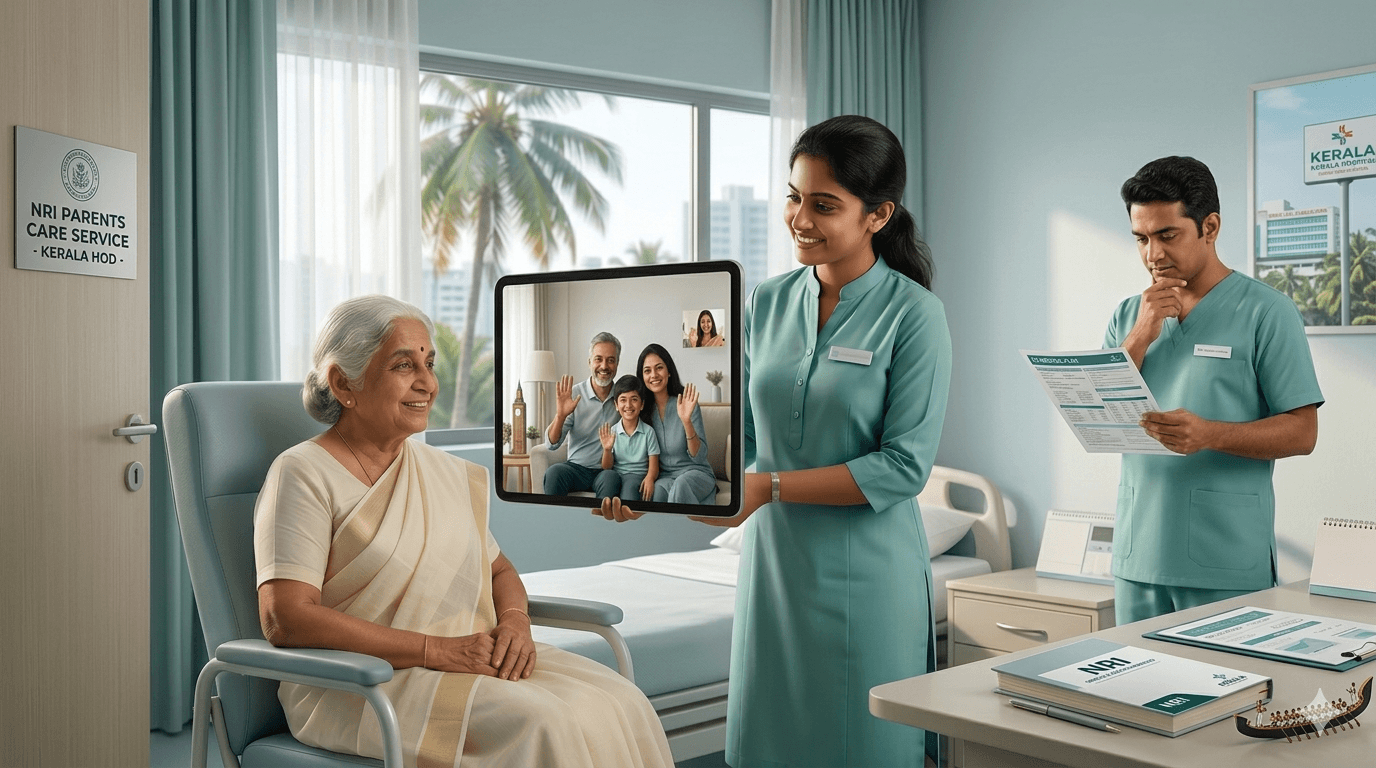
When arranging ophthalmology appointments for a parent you cannot accompany, our companion service for elderly parents ensures the full examination is completed, questions are asked about the findings, and a complete report of what the doctor said - including any changes to eye drop prescriptions or scheduled procedures - is sent to you after the visit.
Practical Steps to Protect Vision at Home
Beyond medical appointments, several practical steps reduce the risk of vision-related harm in the home.
Lighting: most elderly patients need two to three times more light than younger adults to see clearly. Increase lighting in the kitchen, bathroom, stairwells, and reading areas. Night lights in hallways and bathrooms reduce fall risk during nighttime movements.
Contrast: high-contrast settings (dark edges on light floors, light switches that contrast with the wall) help patients with reduced contrast sensitivity navigate safely.
Medication labels: for patients with significant vision impairment, large-print medication labels or a pill organiser prepared weekly by a family member reduce the risk of medication errors from misreading labels.
For patients who have been prescribed eye drops for glaucoma, confirm that the patient or their daily companion knows exactly how to administer them correctly - one drop in the correct eye, with the lower lid pulled gently down to create a pocket, and the eye closed for one to two minutes after administration to improve absorption.
See our guide on managing your parent's chronic conditions for how to integrate eye drop administration into the daily medication routine.
This article is for informational purposes only. All eye conditions should be assessed and managed by a qualified ophthalmologist. For our editorial standards, visit our editorial policy.
Regular eye screening catches serious conditions early.
Prevention is far more effective than waiting for vision loss to become obvious.
Frequently Asked Questions
Schedule your parent's eye examination in Kochi.
Let us know the hospital preference and we will arrange the appointment.
Presenza's care team writes practical guides for families managing elderly hospital visits and remote healthcare coordination.
Get our hospital visit checklist for families.
A practical guide to preparing for appointments, questions to ask doctors, and what to document. Free. No spam.