Families searching for location-specific support can also review our Kochi companion service details and then continue with this guide.
Choosing between attendant and companion for your parent's hospital visit.
Understand the tradeoffs. An attendant is cheaper but unvetted. A professional companion is trained, vetted, and accountable.
When searching for someone to accompany your elderly parent to a hospital in Kochi, you'll likely encounter two options: a patient attendant service and a professional hospital companion service. The terminology is similar - "attendant," "helper," "companion," "support person" - but the services are fundamentally different. Understanding the differences helps you make the right choice for your parent's safety, your peace of mind, and your budget.
What Is a Patient Attendant Service?
A patient attendant, also called a hospital attendant, helper, or caretaker, is typically an individual hired to provide physical or personal assistance to a patient. Attendants sourced through classified ads, local agencies, or informal networks may:
- Assist with walking or mobility
- Help with personal hygiene or toileting during hospital stays
- Run errands (fetch medications, arrange transport, handle paperwork)
- Sit with a patient during overnight hospital stays
- Assist with meals or basic physical care
The Attendant Model
How you find one: Classified ads (Justdial, Sulekha, Urban Company), local agencies, informal networks, or word-of-mouth. Many are independent workers with no formal organization.
Training and vetting: Varies widely. Some may have minimal formal training. Background verification is often limited or non-existent. No standardized credential system.
Cost: Often ₹300-₹800 per day or ₹50-₹150 per hour, making them inexpensive for extended stays.
Accountability: Limited. If something goes wrong, there's often no organization to hold responsible.
Language and cultural match: May or may not speak your parent's language or understand their cultural needs.
Scope of work: Usually focused on physical assistance, not information coordination or family updates.
What Is a Professional Hospital Companion Service?
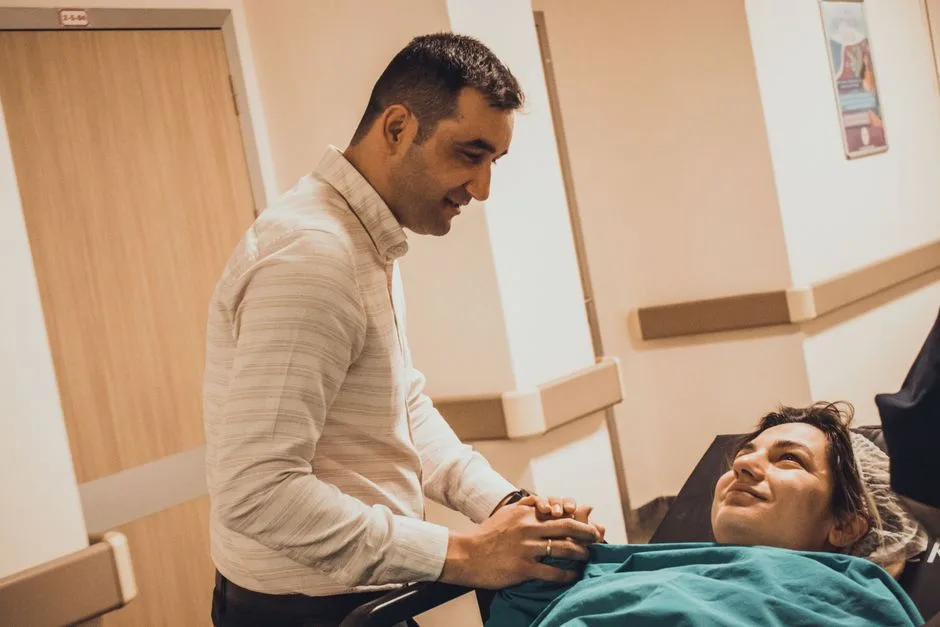
A professional hospital companion - like Presenza - is a structured service that provides trained, vetted, and supervised support for single hospital visits. A companion:
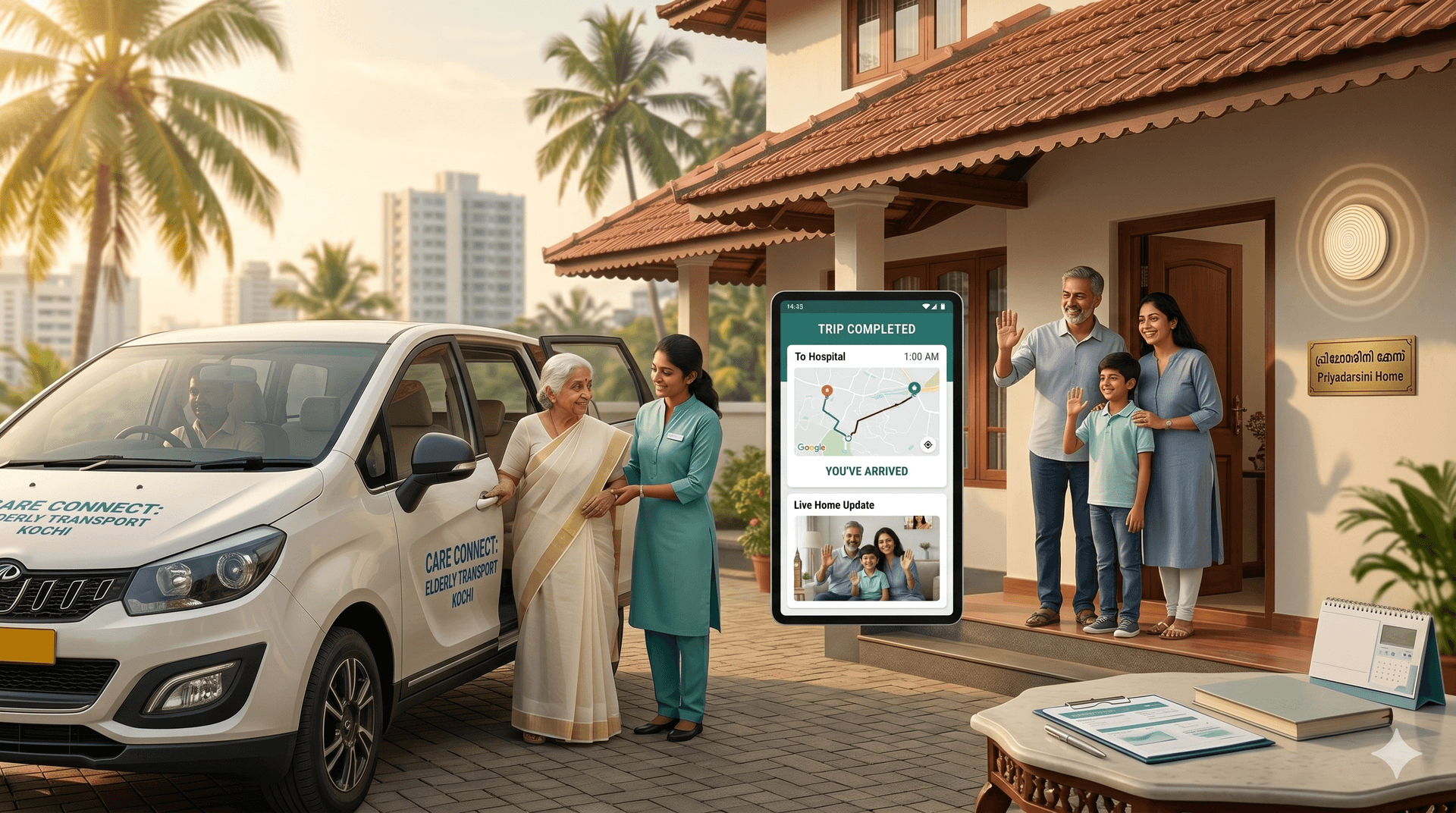
- Picks up your parent from home before the appointment
- Accompanies them through the entire hospital visit
- Navigates OPD processes, queues, and registrations so your parent isn't confused
- Takes notes during consultations and asks clarifying questions
- Coordinates prescriptions and pharmacy pickups
- Provides real-time WhatsApp updates to you throughout the visit
- Drops your parent safely at home
- Delivers a complete post-visit summary within hours (doctor's findings, medications, restrictions, follow-up dates)
The Companion Model
How you find one: Dedicated service (Presenza). Message on WhatsApp to book.
Training and vetting: Thorough. Background verification (police clearance, identity, address, employment history), hospital protocol training, emergency response training, health literacy training.
Cost: Typically ₹800-₹3,000+ per visit depending on visit type and duration. Higher than casual attendants, but structured and transparent.
Accountability: Full organizational accountability. Senior operations lead monitors every visit. If something doesn't meet standards, it's immediately addressed.
Language and cultural match: Matched to your parent's language preference (Malayalam, English, Hindi, Tamil in Kochi).
Scope of work: Comprehensive - presence + hospital navigation + documentation + family communication + post-visit summary.
Side-by-Side Comparison
| Aspect | Patient Attendant | Professional Companion | |---|---|---| | Cost | ₹300-₹800/day (cheaper) | ₹800-₹3,000/visit (more expensive) | | Background Vetting | Often minimal | Thorough (police clearance, employment verification) | | Training | Varies; often none | Standardized (hospital protocols, emergency response, health literacy) | | Hospital Navigation | May not know hospital processes | Trained and familiar with hospital layouts and OPD procedures | | Documentation | Usually not | Yes - takes notes during consultation | | Family Updates | May call/message occasionally | Real-time WhatsApp updates at every checkpoint | | Post-Visit Summary | Usually none | Complete written summary within 30 minutes | | Supervision | None | Senior ops lead monitors every visit live | | Accountability | Low (independent worker) | High (organizational responsibility) | | Consistency | Variable (different people, different standards) | Consistent (trained, supervised, vetted) | | Best For | Multi-day hospital stays, overnight care, long-term support | Single hospital visits, OPD appointments, need for information | | Reliability | Unpredictable | Predictable and professional |
When to Use Each
Use a Patient Attendant If
- Your parent is admitted for 3+ days and needs overnight sitting or personal care assistance
- Your parent needs help with bathing, toileting, or mobility during a hospital stay
- You need low-cost support for extended admission
- Your parent is bed-ridden and needs hands-on physical assistance
- You're arranging informal, unstructured care
Use a Professional Companion If
- Your parent has a single hospital visit or OPD appointment
- You need someone who understands hospital processes and can navigate on their parent's behalf
- You want real-time updates so you know what's happening
- You want accurate documentation of what the doctor said
- You're coordinating care from a distance (different city or country)
- Your parent is anxious or confused by hospital environments
- You can't be there in person but want to stay informed
- You need reliable, accountable professional support
Combining Both Services
Many families use both:
- Companion service for the appointment visit itself (OPD consultation, diagnostic tests, specialist review) - ensures the visit goes smoothly and you get complete information
- Attendant service if admission is needed afterward - for in-hospital sitting, personal care, overnight presence
This combination gives you the best of both: professional visit support plus cost-effective in-hospital presence.
The Hidden Costs of Cheap Attendants
While attendants are cheaper upfront, consider the hidden costs:
Information Loss
A casual attendant may not take notes on what the doctor said. You call your parent later: "What did the doctor say?" Your parent, stressed and medicated, misremembers or only partially recalls. You're now confused and may make wrong follow-up decisions.
Medication Errors
Without proper documentation, your parent or you may be unsure about medication names, dosages, or timing. This can lead to medication errors at home.
Missed Follow-Up Appointments
If no one clearly documented the follow-up date, your parent might miss the next appointment - setting back their care.
Escalation During Emergency
If your parent has a medical emergency during a hospital visit and no one trained is present, the response is slower and less coordinated.
Accountability Gap
If something goes wrong, there's no organization to hold responsible. You're on your own.
A professional companion's higher cost often pays for itself in prevented errors and complications.
Quality Signals in Attendant Services
If you do choose an attendant, look for:
- Formal organization - affiliated with a recognized agency, not just an individual
- Background verification - ask if they've been police-verified
- Training credentials - ask what hospital training they've received
- References - request and check references from previous employers
- Communication ability - ensure they speak your parent's language clearly
- Insurance or contract - understand what happens if something goes wrong
Professional Companion Service Safeguards
When choosing a professional companion service, confirm:
- Third-party background verification - police clearance is mandatory
- Visible training credentials - hospital protocols, emergency response, health literacy
- Uniform and ID - professional appearance and identification for hospital trust
- Real-time supervision - a senior lead monitors every visit live
- Written documentation - post-visit summary provided within 30 minutes
- Accountability - organizational policy on what happens if service doesn't meet standards
- Language match - confirm the companion speaks your parent's language
- Medical context matching - if your parent has dementia or cardiac disease, companion has relevant experience
Making the Right Choice
Choose an attendant if you can answer yes to:
- You need long-term (3+ days) in-hospital presence
- Cost is the primary driver
- You have informal care coordination in place
- Your parent needs hands-on physical assistance
- You don't need real-time external updates
Choose a professional companion if you can answer yes to:
- This is a single hospital visit
- You want reliable, trained, accountable support
- You're coordinating from a distance
- You need accurate documentation and real-time updates
- Your parent is anxious or confused in hospital settings
- You want peace of mind that protocols are being followed
The Real Difference
The core difference isn't just cost or credentials - it's accountability and information.
A casual attendant is a person. A professional companion service is an organization. When something goes wrong with a person, you have limited recourse. When something goes wrong with an organization, there's accountability, responsibility, and a path to resolution.
For single hospital visits in Kochi, especially when you're juggling work or managing from a distance, the professional companion model offers something attendant services can't: guaranteed training, real-time information, complete documentation, and organizational accountability.
For families managing their parents' healthcare, choosing between cost and accountability is the central question. Often, a professional companion for the visit itself (where information matters most) plus an attendant for post-admission care (where presence matters most) balances cost and quality.
Choose based on what your parent needs, what you need from the experience, and where the risk of error is highest.
Professional companions provide information you can trust.
Real-time updates, complete post-visit documentation, accurate medication details, and follow-up coordination.
Frequently Asked Questions
Get professional support for your parent's hospital visit in Kochi.
Message us on WhatsApp to book a companion for your parent's next appointment.
Presenza's care team writes practical guides for families managing elderly hospital visits and remote healthcare coordination.
Get our hospital visit checklist for families.
A practical guide to preparing for appointments, questions to ask doctors, and what to document. Free. No spam.