Families searching for city-specific service details can review our Kochi or Bangalore companion service pages.
Heart disease is manageable when caught early.
We help families monitor cardiac health and coordinate specialist care.
Cardiovascular disease is the leading cause of death among adults over 60 in India. It is also one of the most manageable conditions when detected early, monitored consistently, and treated with appropriate medication and lifestyle adjustments. The gap between "well-managed cardiac disease with a good quality of life" and "repeated emergency hospitalisation" is often the difference between a family that has systems in place and one that is responding to crises reactively.
This guide is for adult children who want to move from reactive to proactive in managing a parent's heart health. It covers the warning signs that must not be ignored, the tests that provide the clearest picture, the lifestyle factors that make the biggest difference, and how to coordinate specialist care effectively.
The Anatomy of Cardiac Risk After 50
The cardiovascular system changes with age in ways that are predictable. The heart muscle becomes slightly stiffer, making it less efficient at filling and pumping. The arteries lose elasticity, causing blood pressure to rise. Plaques built up over decades can restrict blood flow or rupture, causing heart attacks or strokes. The electrical system of the heart becomes more susceptible to irregular rhythms (arrhythmias).
None of these changes are inevitable consequences of ageing that must simply be accepted. Most are significantly delayed or mitigated by blood pressure control, cholesterol management, physical activity, dietary changes, and not smoking. The role of the adult child is to ensure that the monitoring and management that makes this possible actually happens consistently.
The key risk factors your parent's cardiologist uses to assess overall cardiac risk: age, sex, blood pressure, LDL cholesterol, diabetes, smoking history, family history of early heart disease, and body weight. Understanding where your parent stands on each of these helps you understand their overall risk level and why the doctor is making the recommendations they are.
Warning Signs That Require Immediate Action
Some cardiac symptoms are emergencies. Knowing them in advance prevents the dangerous hesitation that costs lives when families waste critical minutes trying to decide whether to call an ambulance.
Chest pain or pressure that is new, severe, or different from any previous pain - particularly if it spreads to the left arm, jaw, neck, or back - is a heart attack warning. Call emergency services immediately. Do not drive the patient to the hospital unless emergency services are unavailable. Time from symptom onset to reperfusion treatment is directly linked to outcomes.
Sudden severe shortness of breath that is not explained by exertion or posture - particularly if the patient cannot speak in full sentences - may indicate acute heart failure or a pulmonary embolism. This is an emergency.
Loss of consciousness or near loss of consciousness (feeling like the room is spinning and the patient almost falls) can indicate a serious arrhythmia. This is an emergency.
Sudden facial drooping, arm weakness, or slurred speech - even if brief and resolving - indicates a transient ischaemic attack (TIA) or stroke and requires same-day emergency evaluation even if symptoms have resolved. TIAs are warnings of imminent stroke risk.
Rapid, irregular, or pounding heartbeat that is new, sustained for more than a few minutes, or accompanied by dizziness or chest discomfort - this may indicate atrial fibrillation (AF), the most common serious arrhythmia in elderly adults and a significant stroke risk factor.
Symptoms That Need a Prompt Appointment, Not an Emergency
Not every cardiac symptom requires emergency services. Some require a call to the cardiologist and a same-day or next-day appointment rather than an emergency room visit.
Increasing shortness of breath with activities that previously caused none - walking up stairs, walking across the room - without an acute change in the last few hours, suggests heart failure or significant cardiac decompensation. This is urgent but not necessarily a 112 call if the patient is comfortable at rest.
New or worsening ankle and lower leg swelling in a patient with known cardiac disease is a heart failure warning sign. Mild swelling appearing after standing for long periods is less concerning. Significant bilateral swelling that pits when pressed warrants cardiac review within a day or two.
Fatigue that is significantly out of proportion to activity - a patient who could previously walk 500 metres who now feels exhausted after fifty metres - warrants evaluation, particularly if the decline is over days to weeks rather than years.
A blood pressure reading significantly above the patient's usual baseline - for example, consistently above 170/100 when the usual controlled level is 130/80 - warrants a call to the doctor, especially if the patient is on blood pressure medication.
Key Cardiac Tests and What They Assess
Families often hear test names during cardiac consultations without understanding what each test is looking for. A basic understanding helps you ask better questions and interpret the recommendations.
An electrocardiogram (ECG or EKG) is a ten-second snapshot of the heart's electrical activity. It detects arrhythmias, previous heart attacks, and current ischaemia. It does not show the structure of the heart or the blood vessels. It is the first test ordered for any cardiac complaint and is available at every major hospital in Kochi within minutes.
An echocardiogram (echo) is an ultrasound of the heart. It shows the size of the heart chambers, how well the heart is pumping (ejection fraction), and how well the heart valves are functioning. It is the essential test for suspected heart failure, valvular disease, and monitoring response to treatment. Results are available at Aster MIMS, Rajagiri, and Lakeshore without significant wait times for patients with a cardiologist referral.
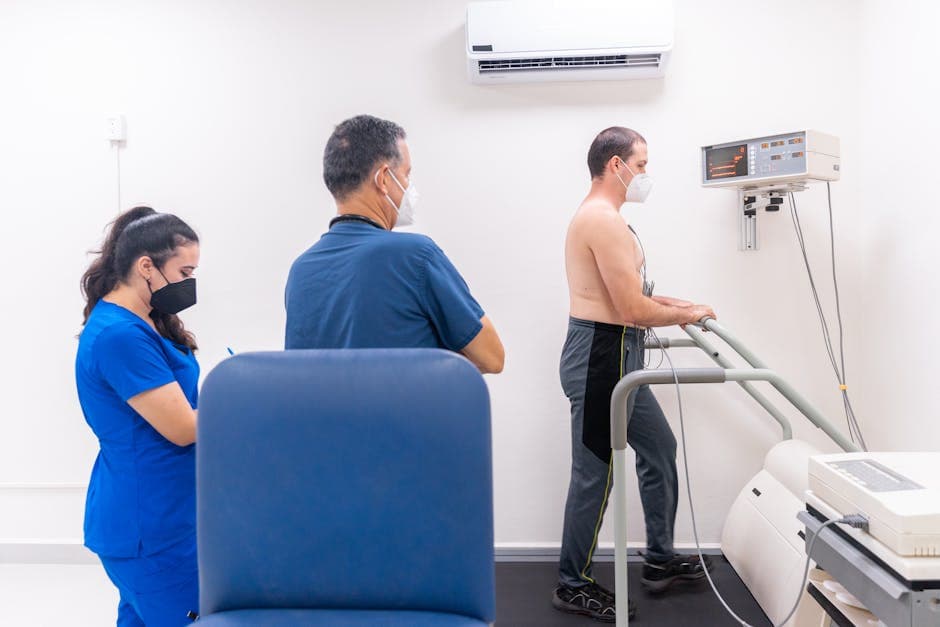
A stress test (treadmill test or TMT) assesses how the heart responds to exertion and is used to detect coronary artery disease (narrowing of the arteries supplying the heart). Not appropriate for all elderly patients - the cardiologist will assess whether it is safe given the patient's baseline function.
A Holter monitor is a portable ECG worn for twenty-four to forty-eight hours, used when a patient has symptoms of arrhythmia that do not appear during a standard ECG. If the patient reports palpitations or episodes of fast heartbeat that come and go, a Holter monitor is often the appropriate next step.
Cardiac catheterisation (angiogram) is an invasive procedure that provides direct imaging of the coronary arteries and is used when significant coronary artery disease is suspected or confirmed. It is both diagnostic and potentially therapeutic - blocked arteries can be stented during the same procedure.
Blood Pressure: The Most Important Number to Control
Hypertension (high blood pressure) is the single most modifiable risk factor for heart attack, stroke, heart failure, and kidney disease. In India, hypertension is underdiagnosed and undertreated, particularly in older adults who may normalise high readings as "just old age."
Target blood pressure for most elderly patients with cardiovascular risk is below 130/80 mmHg, though the specific target your parent's doctor sets may vary based on comorbidities. A reading consistently above 140/90 despite medication suggests the regimen needs adjustment.
Home blood pressure monitoring is essential. Clinic measurements are affected by white coat hypertension (blood pressure rising in the clinic from anxiety). Home readings across different times of day give the cardiologist a much more accurate picture. Take readings in the morning before medication and in the evening before bed. Record them with date and time.
Blood pressure control is achieved through a combination of medications, dietary sodium restriction, weight management, alcohol reduction, and physical activity. Of these, medication adherence is the most important - a patient who takes the medication only when they "feel" their blood pressure is high will remain poorly controlled.
Cholesterol Management and the Role of Statins
LDL cholesterol control is the second most important modifiable cardiac risk factor. For patients who have already had a heart attack, a stent procedure, or a stroke, the target LDL is below 70 mg/dL. For patients with significant risk factors but no prior event, below 100 mg/dL. For lower-risk patients, below 130 mg/dL.
Statins (atorvastatin, rosuvastatin, pravastatin) are the primary medications for LDL reduction. They are among the best-evidenced medications in cardiovascular medicine and are underused in Indian elderly patients, often because of unfounded concerns about side effects.
Muscle pain (myopathy) is the most commonly reported statin side effect. When it occurs, the patient typically notices muscle aching and weakness within the first few weeks of starting or increasing the dose. It is important to report this to the cardiologist rather than stopping the medication independently, because many cases can be managed by switching to a different statin or adjusting the dose.
Check the LDL three to six months after starting or changing a statin. If the target is not achieved, the cardiologist may increase the dose or add a second medication (ezetimibe, which works by a different mechanism). Do not discontinue statins without the cardiologist's guidance.
Physical Activity: How Much and What Type is Safe
The concern many families have - "what if he overexerts himself?" - often leads to overcaution that itself becomes harmful. Inactivity worsens cardiac function, leads to muscle weakness and fall risk, worsens diabetes and blood pressure control, and reduces quality of life. Most elderly cardiac patients benefit significantly from appropriate physical activity.
What is appropriate depends entirely on the specific condition and the cardiologist's assessment. For a patient with well-controlled hypertension and no other cardiac disease, thirty minutes of brisk walking five days a week is usually appropriate and beneficial. For a patient recovering from a recent heart attack or in active heart failure, a supervised cardiac rehabilitation programme is the right starting point.
Ask the cardiologist directly: "What physical activity is safe for my parent at their current level of cardiac health? Are there specific activities they should avoid?" Get a specific answer, not a vague "some gentle exercise is fine."
Dietary Factors That Matter Most
The two dietary changes with the greatest impact on cardiovascular risk are sodium reduction and saturated fat reduction.
Sodium restriction is particularly important for patients with hypertension and heart failure. A daily sodium intake below 2,000 mg (about 5 grams of salt) is a common target. In practice, this means reducing or eliminating added salt in cooking, limiting processed foods (which are high in hidden sodium), and being cautious with pickles, papads, and other preserved foods common in Kerala cuisine that are high in salt.
Saturated fat reduction means limiting butter, ghee, full-fat dairy, and processed meats. Replacing saturated fats with unsaturated fats from sources like fish, nuts, and olive oil reduces LDL cholesterol.
Omega-3 fatty acids (from oily fish like sardines, mackerel, and tuna) have evidence for reducing triglycerides and may have modest cardiovascular benefits. Fish is generally easy to incorporate in Kerala diets and is a natural advantage.
Coordinating Cardiac Care Across Multiple Specialists
A patient with heart failure may see a cardiologist, a nephrologist (kidney specialist, because the kidneys and heart are closely linked in heart failure), and a diabetologist. Each specialist makes medication decisions that affect the other's domain. The coordination risk is real.
Establish which specialist is the primary coordinator for cardiac care - usually the cardiologist. Ensure that after every visit with any specialist, the cardiologist receives a copy of the prescription or consultation notes. The cardiologist is the one who needs to know if the nephrologist changed the diuretic dose or the diabetologist added a new medication.
For appointments at hospitals in Kochi - Aster MIMS, Rajagiri, Lakeshore - the cardiology departments have established coordination pathways for complex patients. Ask explicitly at the first appointment: "How do the different specialists who are managing my parent's care communicate with each other?" A good answer involves a shared electronic record or a documented coordination process. A vague answer is a signal to be more proactive yourself.
Our hospital visits checklist includes specific guidance on how to coordinate multiple specialist appointments within a single visit cycle. Understanding your parent's cardiac blood tests and what the numbers mean helps you track treatment effectiveness, and our guide to medication safety for seniors covers important drug interactions with cardiac medications. For comprehensive care coordination, our companion service for elderly parents handles appointment coordination, document management, and post-visit summary for families who cannot be present at every visit.
This article is for informational purposes only and does not constitute medical advice. Cardiac symptoms should always be evaluated by a qualified cardiologist. For our content standards, see our editorial policy.
Prevention and early detection prevent emergency admissions.
Regular appointments, home monitoring, and lifestyle changes keep hearts healthy longer.
Frequently Asked Questions
Need help managing your parent's heart health?
Message us and we will help coordinate cardiology care in Kochi.
Presenza's care team writes practical guides for families managing elderly hospital visits and remote healthcare coordination.
Get our hospital visit checklist for families.
A practical guide to preparing for appointments, questions to ask doctors, and what to document. Free. No spam.