Families searching for city-specific service details can review our Kochi or Bangalore companion service pages.
Hospital visits feel overwhelming without a plan.
We provide step-by-step guidance and can accompany your parent to ensure nothing is missed.
Most families approach a parent's hospital visit the way most people approach a job interview - they prepare in the car on the way there. They arrive at the registration desk and realise they have left the insurance card at home. The doctor asks what medications the patient is on and the family member guesses. The prescription is written, the appointment ends, and no one is quite sure what the diagnosis means or when they are supposed to come back.
This guide is the preparation system that changes that. It is built from the real patterns of what goes wrong at hospital visits in Kochi and across Kerala, and it is structured so that nothing is left to chance.
Why Preparation Matters More for Elderly Patients
Hospital visits are more complex for elderly patients than for younger adults for several reasons. They often have multiple conditions, which means the consulting doctor needs a clear picture of what else is happening before making any decision. They may have reduced memory and processing speed, which means they cannot reliably relay their own symptom history under pressure. They may have mobility limitations that affect how long the visit can take. And they may be on multiple medications that interact in ways no single doctor has reviewed.
The adult child or companion who walks in prepared converts a potentially chaotic visit into a structured, productive appointment. The doctor spends less time clarifying basics and more time on clinical judgment. The patient is less anxious because someone is clearly handling the coordination. And the family leaves with complete information rather than fragments.
Documents to Gather One Week Before
The week before the appointment is when document preparation should start. Last-minute assembly the morning of the visit is when things get left behind.
The essential documents for any hospital visit are: a government-issued photo ID for the patient, the insurance card with the policy number and insurer's contact details, all recent medical reports related to the condition being assessed, a complete and updated medication list with drug names, doses, and timing, any imaging discs or printed radiology reports from prior scans, and the referral letter if the visit is to a specialist.
For elderly patients with multiple conditions, also prepare a one-page health summary: a condensed version of the health profile that lists conditions, current medications, allergies, and the names of treating doctors. This is the document that goes to every specialist first. If the patient cannot speak for themselves in an emergency, this document speaks for them.
Keep originals and photocopies. Hospitals may retain some documents for their records. Never hand over your only copy of an imaging disc.
The Question List You Should Write Before Every Visit
Fifteen to twenty minutes of consultation time disappears quickly. Without a written question list, families walk out having forgotten to ask the two things they most needed to know.
Write the questions before the appointment, not during it. Organise them by priority so that if the visit runs short, the most important questions get answered first. The standard set for a follow-up visit with a specialist:
What is the current status of the condition compared to the last visit? Are the recent test results within the expected range? Is the current medication dose still appropriate, or does it need adjustment? Are there symptoms to monitor before the next appointment? What is the timeline for the next follow-up, and what should trigger an earlier visit?
For a first visit with a new specialist, add: What is the confirmed diagnosis, and what does it mean for daily life? What are the available treatment options, and what are the tradeoffs? What lifestyle adjustments would make the biggest difference?
Write the questions on paper, not on a phone. Hospitals in Kochi and elsewhere often have poor mobile signal in consultation areas. Paper does not run out of battery.
Day-of Logistics: What to Plan Before You Leave Home
Plan the logistics the evening before, not the morning of. The morning of a hospital appointment is often rushed and anxious, and that is when decisions get made poorly.
Transport: plan the route, account for traffic in Kochi which is predictable by area and time of day, and confirm who is driving or which auto or cab service is being used. If your parent uses a wheelchair or has significant mobility limitations, confirm in advance that the hospital's entrance and OPD floor are accessible without stairs.
Timing: arrive thirty to forty-five minutes before the scheduled appointment time. Hospital registration in Kochi takes fifteen to twenty minutes, and some hospitals require you to collect a token or register at a counter before reaching the OPD floor. Arriving on time for the appointment time itself often means missing the registration window.
Comfort items: bring a water bottle, a light snack for the patient, and anything the patient needs to manage comfort over a two- to three-hour visit. Bring a phone charger or a power bank. Hospital waiting areas have limited seating and unpredictable waiting times.
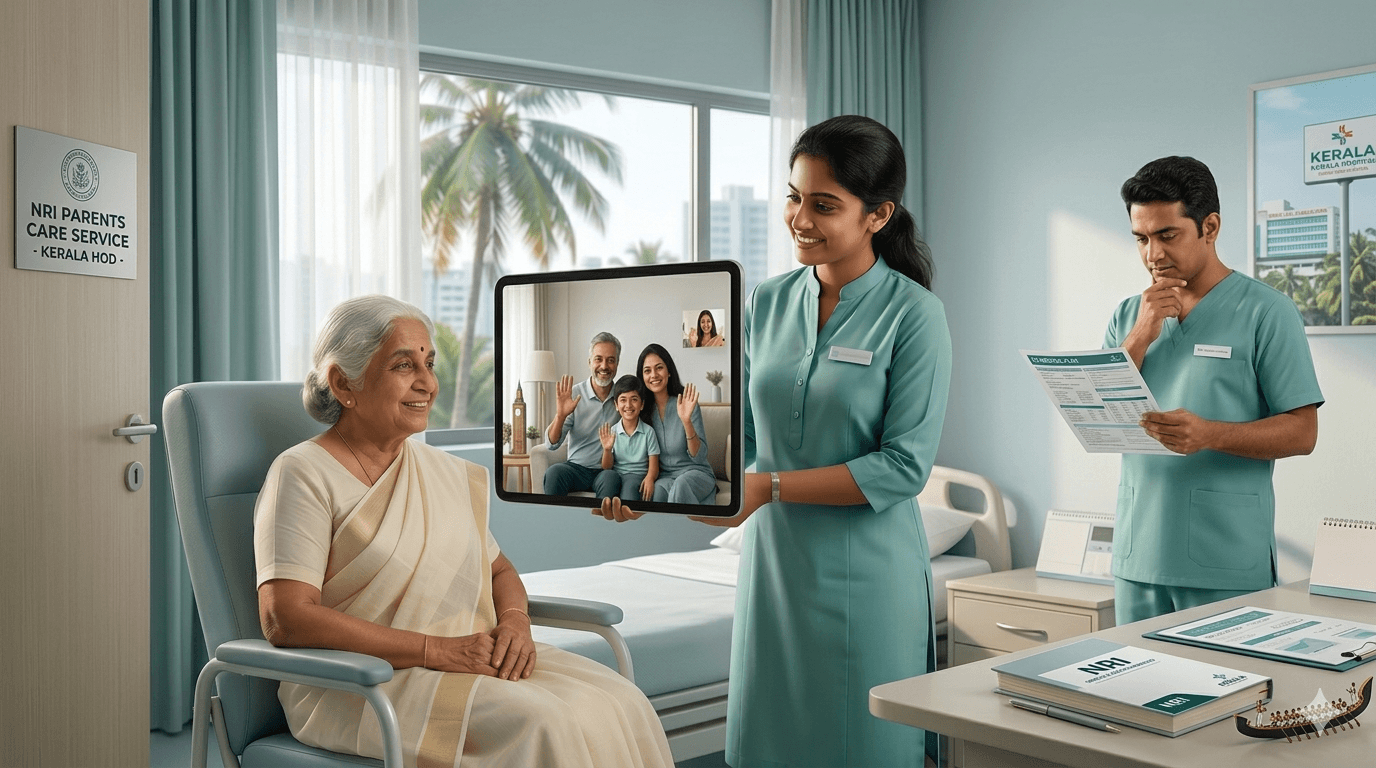
For families arranging these visits for a parent they cannot accompany personally, our companion service in Kochi handles all day-of logistics including home pickup, hospital navigation, and keeping the family updated at each stage.
Navigating Hospital Registration and OPD
Every major hospital in Kochi - Aster MIMS, Rajagiri, Amrita, Lakeshore - has a similar but slightly different registration process. The general flow is: arrive at the main entrance, proceed to the registration counter, provide the patient's ID and insurance details, receive a patient registration number or token, and then proceed to the relevant OPD floor.
For help choosing between these hospitals or understanding the differences between private and government options, see our guide on top hospitals in Kochi and their specializations and our comparison of private vs government hospitals in Kerala.
At the OPD floor, you will usually check in at a nursing station before being directed to a waiting area. The doctor's consultation happens in a numbered room. A staff member or the nursing station will call the patient's name or number.
Know in advance which OPD you are visiting. "Cardiology OPD" and "General Medicine OPD" are on different floors. Arriving at the right floor without asking for directions at every step saves time and reduces the confusion that disorients elderly patients.
Ask the nursing station when you arrive: "How many patients are ahead of us?" This gives you a realistic sense of waiting time and allows you to make the patient comfortable rather than standing anxiously near the consultation room door.
During the Consultation: How to Make It Count
The consultation is the most important fifteen minutes of the visit. Do not squander it.
Sit next to the patient, not behind them. The doctor should be aware you are there and that you are participating in the conversation. Introduce yourself at the start: "I am his daughter. I have been managing his medications and I have his recent reports." This tells the doctor you are an informed participant, not a passive observer.
Present the health profile and medication list first. Let the doctor review them briefly. Then present the symptoms or concerns in order of severity. Most important first.
Take written notes during the consultation. Write down the diagnosis or status update in the doctor's own words, the medication changes with exact drug names and doses, the follow-up date, and any specific instructions. If the doctor says something you do not understand, ask immediately: "Can you explain what that means for daily life?" Doctors at good hospitals in Kerala are accustomed to this question and will answer it.
At the end of the consultation, before leaving the room, confirm: "Is there anything I should watch for before the next appointment? When should I come back, and what would make me come back sooner?" These two questions close the visit properly.
Post-Consultation: Pharmacy, Billing, and Discharge
After the consultation, there are typically two more steps before leaving: collecting the prescription from the hospital pharmacy and completing billing.
At the pharmacy: hand over the prescription written by the doctor. Ask the pharmacist to explain any new medications - what they are for, how and when to take them, and what side effects to watch for in the first week. If the pharmacy does not stock something, ask which nearby pharmacy carries it rather than leaving without the medication.
At billing: review the bill before paying. Hospital bills in Kochi can include charges you did not expect - consultation fees, nursing station fees, or charges for paperwork. If insurance is being used, confirm whether the visit qualifies for cashless processing or whether you will need to claim reimbursement. Keep all receipts.
Before leaving the hospital, confirm that you have: the prescription, all original documents you came with, any new reports or imaging that were done during the visit, and a clear understanding of the next steps.
What to Do in the First 24 Hours After the Visit
The visit does not end when you leave the hospital. The twenty-four hours after a hospital appointment are when medication changes take effect and when new symptoms from tests or procedures may appear.
For a detailed guide on post-hospital care, see our complete article on what to do in the first 48 hours after hospital discharge.
Start new medications at the prescribed time, not at a convenient time. If the doctor said twice daily with food, that means exactly twice daily with food - not once when you remember and once before bed regardless of meals.
Monitor for any side effects from new medications in the first forty-eight to seventy-two hours. Common early side effects include nausea, dizziness, and disturbed sleep. These often settle after the first few days. If they are severe or persist beyond a week, call the doctor's clinic.
Schedule the follow-up appointment within twenty-four hours of the current visit, while the instructions are fresh. Many hospital OPDs in Kochi allow you to book the next appointment at the same visit. If not, call the clinic the next morning.
Creating a Permanent Hospital Visit Record
Every hospital visit generates documents: prescriptions, test reports, consultation notes, imaging. Most families keep these loosely in a folder that becomes impossible to navigate after a year of visits. A better system is organised by condition, not by date.
Create a folder (physical and digital) for each major condition: one for the cardiac history, one for the diabetes management, one for orthopaedic concerns. Within each folder, documents are filed chronologically. The most recent report is always on top.
Photograph every prescription, report, and imaging disc label before filing. Store digital copies in a shared drive accessible to all family members managing the care. When a new specialist asks "do you have the echocardiography from last year," you should be able to find it in thirty seconds.
For help understanding the test reports and medical documents you collect, see our guide on understanding blood test lab reports.
Common Mistakes Families Make at Hospital Visits
After accompanying hundreds of families through hospital visits in Kochi, the patterns of what goes wrong are predictable.
Arriving without documents: the single most common problem. No insurance card means no cashless processing. No medication list means incomplete prescribing.
Letting the patient speak for themselves on history: elderly patients under pressure often give incomplete or inaccurate symptom histories. The family member should supplement, not replace, the patient's account. Frame it as "He mentioned his breathlessness has been worse in the mornings - I noticed he is also sleeping more propped up than he used to."
Leaving without confirming the follow-up date: "Come back in a few months" is not an instruction. Push for a specific date or a specific trigger event that would prompt an earlier return.
Not asking about the medication list review: whenever a new medication is added, confirm with the doctor or pharmacist that it does not interact with any current medication. See our detailed guide on medication safety for elderly patients for the specific interactions that matter most.
Building a Repeatable Visiting System
The goal is not to manage each hospital visit as a one-off event. The goal is a repeatable system that runs the same way every time, regardless of which family member is involved or how stressful the week has been.
Document the system: a written checklist that lists every step from document preparation through post-visit follow-up. Laminate a copy if needed. The system should be transferable to a sibling, a hired companion, or anyone else who needs to take over at short notice.
Review the system after each visit. What went smoothly? What was forgotten? What would you do differently? Update the checklist accordingly. Over three or four visits, the system becomes second nature and the anxiety of hospital visits decreases substantially.
This article is for planning and coordination purposes only, not medical advice. All clinical decisions should be made with your parent's treating doctor. For our editorial standards, see the editorial policy.
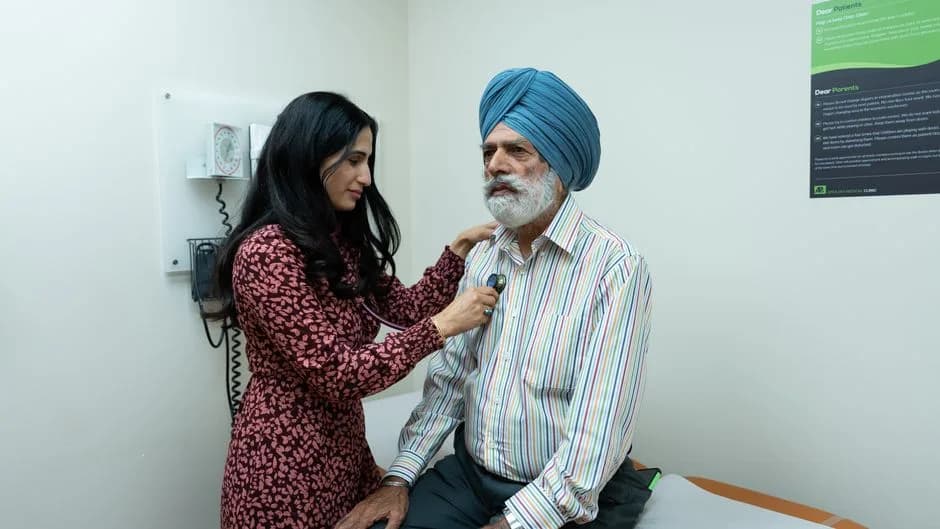
Organisation before arrival makes the visit far more productive.
A checklist and notes system ensures the doctor's recommendations are understood and followed.
Frequently Asked Questions
Need support for your parent's next appointment?
Reach out on WhatsApp and share the hospital and date - we will help coordinate.
Presenza's care team writes practical guides for families managing elderly hospital visits and remote healthcare coordination.
Get our hospital visit checklist for families.
A practical guide to preparing for appointments, questions to ask doctors, and what to document. Free. No spam.