Families searching for city-specific service details can review our Kochi or Bangalore companion service pages.
Before Your Knee Replacement
Understanding the full procedure and recovery timeline helps your parent prepare mentally and physically. Our Kochi companion service arranges specialized orthopedic assessment and coordinates pre-operative physiotherapy to optimize surgical outcomes.
Joint replacement surgery is one of the most common and successful surgical procedures for elderly patients with advanced arthritis. Knee replacement (total knee arthroplasty or TKA) replaces a damaged knee joint with an artificial prosthesis. For elderly patients with severe osteoarthritis, a successful knee replacement can mean the difference between mobility and wheelchair dependence. This guide explains what to expect before, during, and after knee replacement surgery.
When Is Knee Replacement Necessary?
Knee replacement is recommended when conservative treatments have failed and arthritis is severely limiting daily activity. Your parent's surgeon will recommend knee replacement if:
- X-rays show significant joint space narrowing and bone-on-bone contact
- Pain is severe and limits walking, climbing stairs, or daily activities despite medication and physiotherapy
- Non-surgical treatments (weight loss, medication, injections, physical therapy) have been tried without adequate relief
- Your parent is motivated and physically able to participate in post-operative rehabilitation
- Your parent understands the commitment required for recovery
Knee replacement is not emergency surgery. It is typically planned weeks or months in advance, allowing time for pre-operative assessment and preparation.
Pre-Operative Assessment: Essential Checks
Before surgery, your parent will undergo comprehensive pre-operative evaluation:
Orthopedic surgeon assessment: The surgeon examines the knee, reviews X-rays and imaging, explains the procedure, answers questions, and documents informed consent.
Anesthesia consultation: The anesthesiologist reviews medical history, current medications, previous anesthetic reactions, and determines the safest anesthesia approach. For elderly patients, this consultation is critical.
Blood tests and baseline investigations: Complete blood count, blood type, kidney function, liver function, blood glucose, and clotting studies are done. An electrocardiogram (ECG) is obtained. Chest X-ray may be done.
Exercise tolerance assessment: If your parent has heart disease or breathing limitations, stress testing or respiratory function testing may be needed.
Medication review: Current medications are reviewed. Some medications (blood thinners, anti-inflammatories) may need to be stopped temporarily before surgery.
Dental check: If your parent has dental infections or loose teeth, these are addressed before surgery (bacteria from mouth can seed the new joint).
Managing chronic conditions: If your parent has diabetes or hypertension, these are optimised before surgery. See our guide on managing chronic conditions in elderly parents and joint pain and arthritis treatment options.
The Surgery Day: What Happens Step by Step
Arrival and preparation: Your parent arrives 1-2 hours before surgery. They change into surgical clothing, place their belongings in secure storage, and meet the surgery team.
IV placement and pre-medication: A nurse places an IV line. Pre-medication (sedative, pain relief) may be given.
Transfer to operating room: Your parent walks to the operating room or is transported by wheelchair.
Anesthesia induction: The anesthesiologist administers anesthesia. Monitoring equipment (heart monitor, blood pressure cuff, oxygen sensor) is connected.
Positioning: Your parent is positioned on the operating table with appropriate padding to prevent pressure injuries.
Surgical site preparation: The surgical knee is cleaned with antiseptic solution and draped with sterile surgical drapes.
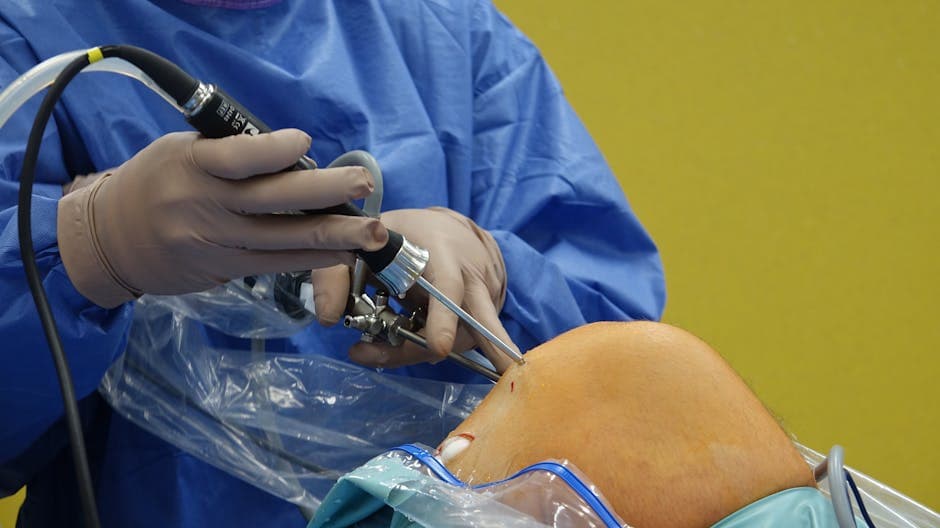
The surgery itself: The surgeon makes an incision (typically 8-10 inches), removes damaged bone and cartilage, and implants the prosthesis. The procedure typically takes 60-90 minutes.
Wound closure: The surgeon closes the incision with sutures or staples, applies a sterile dressing, and may place a drain to remove fluid accumulation.
Recovery room: Your parent wakes up in the recovery room, still drowsy. Nurses monitor vital signs and pain level.
Hospital Stay: What to Expect
For knee replacement, most elderly patients stay 2-3 nights in the hospital:
Day 0 (surgery day): Your parent rests in recovery. Pain is managed. Early physiotherapy (gentle leg movements, breathing exercises) begins.
Day 1: Physiotherapy intensifies. Your parent begins walking with assistance (walker or crutches). Pain management continues. IV fluids continue until your parent is eating and drinking well.
Day 2: Your parent typically walks further. Discharge planning begins. The surgical team reviews medications, wound care, physiotherapy exercises, and warning symptoms.
Day 3: Most patients are discharged if they can walk safely and manage stairs with assistance.
Pain Management Post-Operatively
Post-operative pain is severe immediately after surgery. Families must understand this is normal and manage it actively:
- IV pain medications are given as needed in the immediate post-operative period
- Transition to oral pain medications (typically paracetamol, NSAIDs, opioids) by day 2-3
- Pain medication is most effective when taken regularly (not waiting until pain is severe)
- Physical therapy causes temporary pain increase, but this is necessary for recovery
- After 4-6 weeks, most patients significantly reduce pain medications
Swelling and Fluid Management
Swelling (edema) after knee replacement is significant and expected:
- Swelling peaks around day 3-5 post-operatively
- Ice application: 15-20 minutes, several times daily, reduces swelling
- Leg elevation: Keeping the leg elevated above heart level reduces swelling
- Compression: Compression stocking or bandage applied by the hospital or physiotherapist
- Normal activities: Swelling gradually resolves over weeks to months
Physiotherapy: The Key to Recovery
Successful recovery depends critically on physiotherapy. Your parent must commit to aggressive physical therapy:
In-hospital physiotherapy (days 1-3): Walking with support, range-of-motion exercises, muscle strengthening exercises.
Post-discharge physiotherapy (weeks 1-12): Most patients require 3x-weekly physiotherapy for 8-12 weeks. The physiotherapist guides your parent through a structured progression of exercises.
Home exercises: Between physiotherapy sessions, your parent practices prescribed exercises multiple times daily (typically 30-45 minutes total daily).
Progressive goals:
- Week 1-2: Straight leg raises, seated knee bends, walking with walker
- Week 3-6: Walking with crutches then cane, heel slides, step-ups, quadriceps strengthening
- Week 7-12: Stairs, light resistance training, balance activities
Compliance is critical: Patients who skip physiotherapy or don't do home exercises develop stiffness and limited range of motion that is difficult to recover.
Wound Care and Warning Signs
The surgical incision requires careful monitoring:
- Surgical dressing is typically removed 10-14 days after surgery
- Incision may be closed with sutures, staples, or dissolvable sutures
- Keep wound clean and dry; don't submerge in water until fully healed
- Slight redness, minor swelling, and mild drainage are normal
- Contact the surgeon immediately if: fever > 38.5C, increasing redness, pus, foul odor, wound opening, or increasing pain
Driving and Return to Activities
Driving: Most patients can resume driving 4-6 weeks post-operatively if pain is controlled and they can safely operate foot pedals. Manual cars may take longer.
Work: Desk work can resume 4-6 weeks post-operatively. Jobs requiring standing/walking take 8-12 weeks.
Sports and recreation: Low-impact activities (walking, swimming, golf) can resume 3-4 months post-operatively. High-impact activities (running, jumping) are generally not recommended.
The 12-Week Recovery Milestone
By 12 weeks post-operatively, most patients have achieved:
- Pain reduced to minimal levels
- Ability to walk without assistive device (cane, walker)
- Good range of motion in the knee
- Strength approaching pre-surgical baseline
- Return to most pre-arthritis activities
However, continued improvement occurs up to 1-2 years post-operatively. Some swelling and stiffness may persist even at 12 weeks.
Living With Your Knee Replacement
Modern knee prostheses are durable for 15-20+ years. Most elderly patients will not outlive their prosthesis. However:
- Future dental work or surgery requires antibiotic prophylaxis (to prevent joint infection)
- Certain high-impact activities may accelerate prosthesis wear
- If the prosthesis fails, revision surgery is possible but more complex
- Annual follow-up with the surgeon is reasonable to monitor the prosthesis
Blood Clot Prevention: A Critical Post-Operative Priority
Deep vein thrombosis (DVT) and pulmonary embolism are among the most serious complications after knee replacement. Elderly patients are at higher risk because of reduced mobility and slower blood circulation during recovery. Your parent's hospital will implement a clot prevention protocol that typically includes:
Blood thinning medications: Anticoagulant medications such as heparin injections, apixaban, rivaroxaban, or aspirin are started within 24 hours of surgery and continued for 2-6 weeks post-operatively. Ensure your parent takes these medications exactly as prescribed. Missing doses significantly increases clot risk.
Compression stockings: Graduated compression stockings are applied during the hospital stay and worn for several weeks after discharge. Ensure your parent wears them as instructed, even if they find them uncomfortable.
Early mobilisation: Getting out of bed and walking on the first day is the single most important clot prevention measure. Do not discourage this even if your parent finds it painful. The physiotherapy team will support them safely.
Warning signs to act on immediately: If your parent develops calf pain, one-sided leg swelling, or sudden shortness of breath after discharge, go to the emergency room without delay. These are symptoms of DVT and pulmonary embolism respectively. Both are medical emergencies that require immediate treatment.
Partial vs Total Knee Replacement
Some elderly patients are candidates for partial (unicompartmental) knee replacement rather than full replacement. Understanding the difference helps families ask informed questions:
Total knee replacement: Replaces all three compartments of the knee joint. Used when arthritis affects the entire knee. The most commonly performed knee replacement surgery.
Partial knee replacement: Replaces only the damaged compartment, typically the inner (medial) side. Used when arthritis is confined to one area of the knee joint.
Advantages of partial replacement: Faster recovery by 1-2 weeks, less blood loss during surgery, better preserved natural knee feel, and higher patient satisfaction scores in appropriately selected candidates.
Limitations: Not suitable when arthritis affects multiple compartments. Conversion to total replacement if the partial replacement fails is more complex than a primary total replacement.
Ask your parent's surgeon specifically whether partial replacement is an option and what percentage of patients they recommend for each type. Not all surgeons perform partial replacements, and appropriate candidate selection is critical.
Questions to Ask Your Orthopaedic Surgeon
Before consenting to knee replacement, families should ask:
- Is my parent a candidate for partial or total knee replacement, and why?
- What type of prosthesis will you use and what is its expected lifespan?
- How many knee replacements of this type do you perform each year?
- What are the specific risks for my parent given their age and medical conditions?
- What post-operative rehabilitation program do you recommend?
- Should we arrange private physiotherapy in addition to hospital-based sessions?
- What are the warning signs of prosthesis problems in the first year?
- Which hospital should my parent go to if a complication develops at night or on a weekend?
Having clear answers before surgery reduces anxiety and helps families plan the recovery period practically.
For families managing pre- and post-operative knee replacement care remotely, our companion service for elderly parents coordinates pre-operative assessment, accompanies your parent through surgery, manages post-operative physiotherapy and recovery, and monitors for complications.
This article is for informational purposes only. Knee replacement decisions should be made with your parent's orthopedic surgeon. For our editorial standards, see our editorial policy.
Supporting Recovery at Home
Post-operative rehabilitation determines long-term function. If managing your parent's recovery remotely, our team handles physiotherapy coordination, pain management, and mobility monitoring--critical during the first 12 weeks when recovery is maximum.
Frequently Asked Questions
Ready to Optimize Your Parent's Knee Surgery?
From pre-operative assessment through 12-week rehabilitation, we handle coordination and monitoring so your parent achieves the best possible outcome.
Presenza's care team writes practical guides for families managing elderly hospital visits and remote healthcare coordination.
Get our hospital visit checklist for families.
A practical guide to preparing for appointments, questions to ask doctors, and what to document. Free. No spam.