Families searching for city-specific service details can review our Kochi or Bangalore companion service pages.
Spiritual practice should not mean being vulnerable.
Your parent should not have to choose between faith and safety, between spiritual practice and dependence.
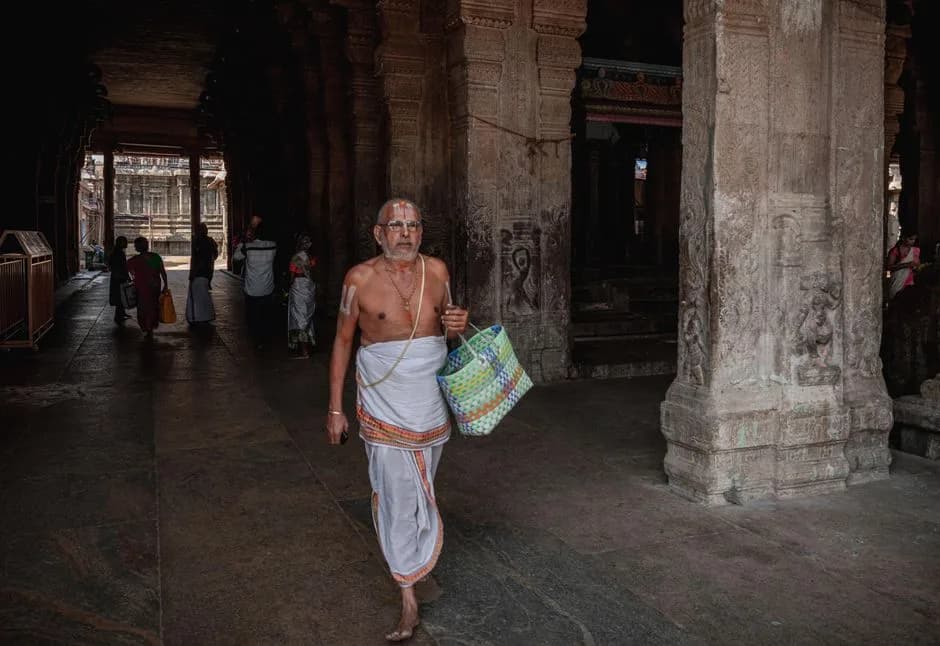
Your mother goes to temple every Friday. She has done this for fifty years. It is not an errand. It is practice. It is community. It is her spiritual life.
Now she is 78. The temple is far. Getting there is hard. The crowds are overwhelming. She is unsteady on her feet.
You suggest she stop going.
She refuses. But you can see she is struggling. After temple, she is exhausted. She worries about falling. She is afraid to go alone. But going alone is safer than forcing you to rearrange your work.
So she goes. Anxiously. Alone.
This is not okay. Your mother should not have to choose between her spiritual practice and her safety. Between dignity and vulnerability.
Why temple matters
For many elderly, temple (or church, mosque, synagogue, spiritual community) is not optional. It is essential.
It is purpose. Community. Rhythm to the day. Connection to something larger. After a lifetime of practice, spiritual life is not a luxury. It is part of what makes life meaningful.
When elderly stop practicing their faith, something important is lost. Purpose diminishes. Community shrinks. Mental health suffers.
But for some elderly, getting to temple is genuinely hard. The distance. The crowds. The physical demands. The safety concerns.
So they stop practicing.
This should not happen.
What makes temple visits hard for elderly
Distance and transportation
The temple might be far. Your parent cannot drive or does not want to drive that distance. Public transportation is confusing or unreliable. A cab is expensive if done regularly.
Crowds and noise
Temple (or church) is crowded, especially on festival days or weekends. The noise is overwhelming. The crowds make falling more likely. The sensory overload is exhausting.
Physical demands
Standing for long periods. Climbing stairs. Removing shoes. Sitting on floors. For someone with arthritis, mobility problems, or balance issues, these are genuinely difficult.
Cognitive challenges
Finding the temple. Finding the right section. Understanding the schedule. Managing belongings. These seem simple but become complex with age.
Safety concerns
Falling in a crowd. Getting lost. Being unable to get home. Being vulnerable if something happens and your parent is alone.
Social withdrawal
Your parent fears being seen as weak or dependent. Fears being a burden. So they withdraw rather than ask for help.
What a companion does at the temple
A companion:
- Accompanies your parent to the temple
- Provides transportation and logistics
- Stays with your parent throughout
- Helps with physical tasks: removing shoes, sitting, standing
- Manages belongings
- Protects your parent in crowds
- Ensures your parent can see and participate
- Takes your parent's pace, not the crowd's
- Brings water and ensures your parent is comfortable
- Gets your parent home safely
The companion is not worshipping (this is your parent's spiritual practice). The companion is present. Available. Protective. Ensuring your parent can practice their faith safely and with dignity.
Why this matters
Spiritual practice is not luxury. It is essential to wellbeing, especially for elderly.
Your parent should not have to choose between faith and safety. Between spiritual practice and vulnerability.
A companion enables both. Your parent practices their faith fully present. Your parent is safe. Your parent is not alone or afraid.
And you know your parent is okay.
Temple outings and the bigger picture
Today, Presenza is present for hospital visits. But this is where Presenza is heading.
Your parent at a temple feels what a patient at a hospital should feel: seen, supported, dignified, cared for. Not managed. Not treated. Just: present with them.
The model is the same: somebody there, fully there, for your parent's experience.
The impact is spiritual wellbeing. Purpose. Community. Connection. These are as important to health as any medicine.
When companion support for spiritual practice matters
Festivals and pilgrimages
Important religious days require long waits, large crowds, travel. A companion makes these possible safely.
Practices that require travel
Weekly temple. Monthly gatherings. Annual pilgrimages. Regular practice becomes possible with logistical support.
Health conditions that make crowds difficult
Hearing problems (hard to hear prayers in noisy environment). Balance problems (falling risk in crowds). Arthritis (physical demands are painful). A companion manages these challenges.
Isolation after loss
Your parent lost a spouse. Temple was something they did together. Returning alone is hard. A companion provides initial support until your parent rebuilds community.
Moving to a new city
Your parent's temple is far in a new city. They do not know anyone. A companion helps them find community.
The conversation with your parent
"I notice temple is important to you. I do not want you to stop practicing because of logistics or safety concerns."
"Would having someone there help? Not to worship. Just to be there. To help with the practical side. To keep you safe and comfortable."
Presenza beyond hospitals
This is where Presenza is expanding. Hospital visits are the beginning. But presence is needed anywhere your elderly parent faces something challenging alone.
Temple. Bank. Government office. Airport. Shopping. Daily life.
The model works because:
- Your parent needs logistical support and physical presence
- Safety and dignity matter
- You need to know your parent is okay
- Your parent can do things that matter to them
Presenza is not medical. Presenza is: being fully there. Managing logistics. Enabling your parent to live fully.
Temple visits are where that begins.
Spiritual practice is not optional at any age
Your parent should not have to give up spiritual practice because they are old.
Your parent should not have to choose between dignity and safety.
Professional companion support makes both possible.
Your parent practices their faith. Your parent is safe. Your parent is not alone.
That is presence.
Ready to support your parent's spiritual and daily life?
Professional companion support extends beyond hospitals to anywhere your parent needs reliable, dignified presence. From temple visits to daily outings, we are there.
See how companion support works:
Companion support enables your parent to practice fully.
Safe, dignified spiritual practice is possible at any age with professional presence.
Frequently Asked Questions
Support your parent's spiritual wellbeing.
Arrange companion support for temple visits and spiritual outings. Enable your parent to continue practices that matter.
Presenza's care team writes practical guides for families managing elderly hospital visits and remote healthcare coordination.
Get our hospital visit checklist for families.
A practical guide to preparing for appointments, questions to ask doctors, and what to document. Free. No spam.