Families searching for city-specific service details can review our Kochi or Bangalore companion service pages.
Dental problems affect far more than teeth.
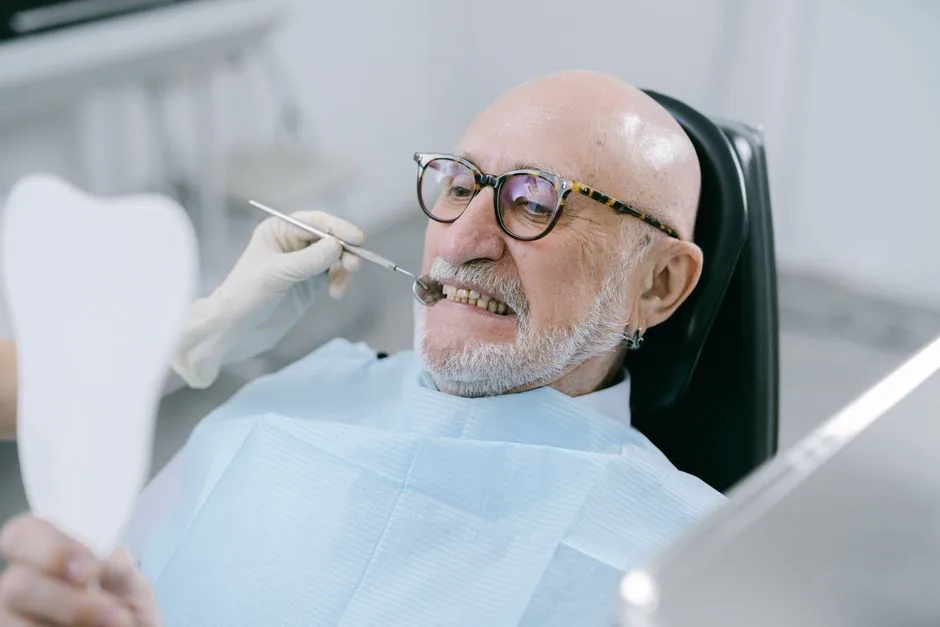
We help families understand dental health as part of overall elderly care.
Dental health is the one aspect of elderly parent care that most adult children consistently deprioritise. The cardiac specialist, the diabetologist, and the orthopaedic doctor all get their follow-up appointments. The dentist gets a visit only when a tooth hurts.
This pattern has consequences that extend well beyond toothache. Oral health in elderly adults is directly linked to cardiovascular disease risk, blood glucose control in diabetics, nutritional status, and respiratory health. An untreated infected tooth is not a minor inconvenience - it is an active infection that the immune system of an elderly patient may struggle to contain, and in severe cases it can become life-threatening.
This guide covers what changes in the mouth with age, the conditions that are most common and consequential in elderly patients, the links to systemic health, and how to set up a dental care routine that actually happens.
How the Mouth Changes With Age
Several changes in oral health are the expected consequence of ageing, and understanding them helps separate normal from problematic.
Gum recession is universal with age. As gum tissue recedes, the roots of the teeth - which are not covered by protective enamel - are exposed. Root surfaces are more susceptible to decay than enamel surfaces, which is why elderly adults often develop cavities in different locations than younger adults.
Dry mouth (xerostomia) is extremely common in elderly patients, primarily because many commonly prescribed medications reduce saliva production. Antihypertensives, antihistamines, antidepressants, and diuretics all list dry mouth as a frequent side effect. Saliva is the mouth's primary defence against decay and infection - it buffers acids, washes away food particles, and contains antimicrobial proteins. Chronic dry mouth dramatically accelerates tooth decay and gum disease.
The sense of taste diminishes with age, which can affect appetite and nutrition. Difficulty chewing from tooth loss or poor-fitting dentures further reduces dietary range, often pushing elderly patients towards soft, processed foods that are frequently high in refined carbohydrates - accelerating decay in remaining teeth.
Periodontal Disease and Its Systemic Consequences
Periodontal disease (gum disease) ranges from gingivitis (reversible gum inflammation) to periodontitis (irreversible destruction of the bone and tissue supporting the teeth). In elderly adults, periodontitis is the most common cause of tooth loss.
The oral bacteria responsible for periodontal disease do not stay in the mouth. Research has established links between periodontal disease and cardiovascular disease, with oral bacteria found in arterial plaques. The mechanism is thought to involve both direct bacterial invasion and systemic inflammation triggered by chronic oral infection.
For diabetic patients, the relationship is bidirectional: poor blood glucose control worsens periodontal disease, and periodontal disease makes blood glucose harder to control. Managing periodontal disease in a diabetic patient can improve HbA1c levels - an effect that is clinically measurable and well-documented.
For patients with prosthetic heart valves or who have had certain cardiac procedures, oral bacteria from periodontal disease are a recognised risk factor for infective endocarditis (infection of the heart's inner lining). These patients are typically prescribed antibiotics before dental procedures - this protocol must be followed without exception.
If your parent has been diagnosed with diabetes, cardiovascular disease, or had a cardiac procedure, ensuring they have regular dental examinations is not optional - it is part of managing those systemic conditions. See our guides to heart health after 50 and managing chronic conditions for comprehensive information on coordinating dental care with other health management.
Common Dental Conditions in Elderly Patients
Root caries (decay of exposed root surfaces) are the most common cavity type in elderly patients, driven by gum recession and dry mouth. Root decay progresses faster than enamel decay and can destroy a tooth rapidly if not caught early. Annual dental examinations are the only way to catch root caries before they reach the tooth's nerve.
Denture-related problems are common in patients who have lost teeth. Ill-fitting dentures cause persistent sores on the gums, restrict diet to soft foods, and can cause aspiration of denture particles in patients with reduced swallowing reflex. Dentures should be assessed for fit annually, as the underlying bone and gum tissue changes shape over time even after teeth are lost.
Denture stomatitis (redness and inflammation under a denture, often caused by Candida fungal infection) is very common in elderly patients. It is often asymptomatic but causes discomfort and can affect denture fit. It is treated with antifungal medication and improved denture hygiene.
Oral cancer risk increases with age and is significantly elevated in patients with a history of tobacco use (including smokeless tobacco common in rural Kerala) or alcohol use. Oral cancer often presents as a non-healing sore, white or red patch, or lump in the mouth or throat. Annual dental examinations should include an oral cancer screening. Diagnosis at an early stage is associated with dramatically better outcomes than late-stage detection.
Managing Dry Mouth: A Practical Approach
Since dry mouth in elderly patients is primarily medication-driven, the first step is identifying which medications are contributing. Do not adjust medications without the prescribing doctor's guidance, but understanding the cause helps explain why dental problems are occurring and whether any substitutions are clinically possible.
Practical management of dry mouth includes frequent small sips of water throughout the day, sugar-free chewing gum or sugar-free hard candies to stimulate saliva, specially formulated artificial saliva sprays or gels (available in pharmacies in Kochi), avoiding caffeine and alcohol which worsen dry mouth, and using a humidifier in the bedroom if the environment is dry.
Dental management of dry mouth includes fluoride treatment (prescription-strength fluoride gels applied at home) to protect exposed root surfaces, more frequent dental check-ups (every four to six months rather than annually), and modification of oral hygiene routine to be gentler on sensitive gum tissue.
Patients with significant dry mouth should be specifically warned against sugar-containing beverages and throat lozenges - these are sometimes used by elderly patients for throat comfort but create an environment of constant sugar exposure that accelerates decay dramatically.
Setting Up a Dental Care Routine
The most common dental care failure in elderly patients is not insufficient treatment - it is insufficient prevention. Many families in Kochi arrange dental visits only when a problem is evident. Preventive dental care at six-monthly or annual intervals catches and addresses problems before they become complex.
The foundational routine at home: twice-daily tooth brushing with a fluoride toothpaste, using a soft-bristled brush. For patients with limited hand strength or dexterity, an electric toothbrush is significantly more effective than a manual brush. Dental floss or interdental brushes clean the spaces between teeth where brushing cannot reach and where a significant proportion of cavities and gum disease begin.
For patients with dentures: dentures should be removed and cleaned every night, soaked in a dental cleaning solution or clean water, and the gums and palate should be brushed gently with a soft brush. Dentures should never be worn continuously - removing them at night allows the gum tissue to recover and prevents accelerated denture stomatitis.
Annual professional dental cleaning (scaling) removes calculus (hardened plaque) that cannot be removed by home brushing and is the primary cause of gum disease progression. This should be booked as a routine annual appointment, not deferred until a problem is visible.
When to See a Dentist Promptly
Dental conditions in elderly patients can progress rapidly because the immune response is slower and the mouth's defence mechanisms (saliva production) may be compromised. Symptoms that warrant a dental appointment within a week rather than waiting for the annual check:
Persistent toothache or tooth sensitivity to temperature that lasts more than two weeks. A tooth that was mildly sensitive and is now painful to biting or spontaneously aching has likely progressed to pulpitis or abscess.
Swelling of the gum or face near a tooth. Facial swelling from a dental abscess can progress to a serious deep-space neck infection (Ludwig's angina), which is a medical emergency. Swelling that is rapidly spreading, causing difficulty swallowing, or causing fever requires emergency care, not a dental appointment.
A loose tooth in an elderly patient with fixed dentition. Adult teeth should not be loose in the absence of significant trauma. Loosening indicates advanced bone loss from periodontitis or, less commonly, a jaw bone lesion that requires imaging.
A non-healing sore, lump, or white or red patch in the mouth that has been present for more than two weeks and is not associated with a known irritation source (such as a sharp denture edge). These require evaluation for oral cancer.
Coordinating Dental Care With Other Medical Specialists
For elderly patients on blood thinners (warfarin, aspirin, clopidogrel), invasive dental procedures - extractions, gum surgery, implant placement - require coordination with the prescribing cardiologist or haematologist regarding whether to temporarily adjust anticoagulation. Many routine dental procedures can be performed safely without stopping blood thinners. The decision should be made by the prescribing physician, not by assuming that all dental procedures require stopping the medication.
Bisphosphonate medications (used for osteoporosis - alendronate, risedronate, zoledronic acid) carry a risk of medication-related osteonecrosis of the jaw (MRONJ) when invasive dental procedures involve bone. The dentist must know if your parent is taking any bisphosphonate before performing tooth extractions or implant procedures. This is a situation where the medication list you maintain and bring to every appointment is directly relevant to dental safety.
For dental care in Kochi, major hospitals including Aster MIMS and Rajagiri have dental departments. Private dental practices in Kochi vary significantly in equipment and expertise for complex elderly patients. For patients requiring specialist dental care (periodontics, oral surgery, prosthodontics), a hospital-based dental department or a specialist practice is preferable to a general dental clinic.
When arranging dental visits for a parent who needs accompaniment, see our guide on hospital visit preparation for how to organise the visit logistics. For families coordinating care from outside Kochi, our companion service handles accompaniment for dental appointments alongside medical specialist visits.
Nutrition and Dental Function
Tooth loss and poor dental function affect nutrition significantly. Patients who cannot chew comfortably avoid fibrous vegetables, tough proteins, and whole grains - foods that are important for managing diabetes, blood pressure, and cardiovascular risk. The result is a diet skewed towards soft, easily chewed foods that are often high in refined carbohydrates.
When dental problems are limiting a parent's diet, the conversation with the treating dentist should include dietary impact as a factor in the treatment decision. Replacing a missing tooth with a denture or implant is not just cosmetic - it is a functional intervention that affects overall health.
Ask the dentist: "Is there anything about my parent's dental condition that may be limiting what they can eat?" And ask the doctor managing their chronic conditions: "Given what we know about my parent's diet, is dental function something we should address as part of managing their diabetes/blood pressure?"
This article is for informational purposes only. Dental conditions in elderly patients should be assessed by a qualified dentist. For our editorial standards, see our editorial policy.
Prevention is simpler and less costly than treatment.
Regular dental visits catch problems early when they are still manageable.
Frequently Asked Questions
Book your parent's dental checkup in Kochi.
We can arrange appointments at Aster MIMS, Rajagiri, or other facilities.
Presenza's care team writes practical guides for families managing elderly hospital visits and remote healthcare coordination.
Get our hospital visit checklist for families.
A practical guide to preparing for appointments, questions to ask doctors, and what to document. Free. No spam.