Families searching for city-specific service details can review our Kochi or Bangalore companion service pages.
Movement is the best medicine for aging.
Exercise preserves strength, balance, independence, and mental health. Inactivity causes the very problems that scare people about aging.
Your parent used to walk every morning. Now they sit most of the day. You suggest walking. They say they are afraid of falling. They say they are too old to exercise.
This fear is understandable. But the real risk is what happens when your parent stops moving.
Immobility in elderly leads to muscle loss, bone loss, balance problems, cognitive decline, falls, and loss of independence. Exercise is not luxury. For elderly, it is the difference between independence and dependence.
Why physical activity matters in aging
Physical activity does more than build muscle. It is medicine for the entire body.
Strength training preserves muscle (sarcopenia happens when you stop using muscles), maintains bone density (prevents fractures), and improves balance (prevents falls).
Aerobic activity strengthens the heart, improves circulation, prevents stroke and heart disease, and improves breathing.
Flexibility and balance work prevent falls and maintain independence for daily tasks (bending, reaching, climbing stairs).
Cognitive activity (learning new movement patterns) stimulates the brain and may slow cognitive decline.
For elderly, physical activity also preserves independence. Your parent can climb stairs, get out of a chair, carry groceries, play with grandchildren. These are not trivial. These are everything.
Why elderly avoid exercise
It makes sense. Moving is harder. There is real risk of falling. Recovery from falls takes longer. The effort feels greater than the benefit seems to be.
Also, if your parent has been sedentary for years, starting movement is genuinely hard. The muscles are weak, the joints are stiff, the breath comes quickly.
But avoiding movement makes it worse. The weakness increases. Balance worsens. Fear increases.
This is a negative cycle that must be broken.
What kind of exercise is safe for elderly
Walking
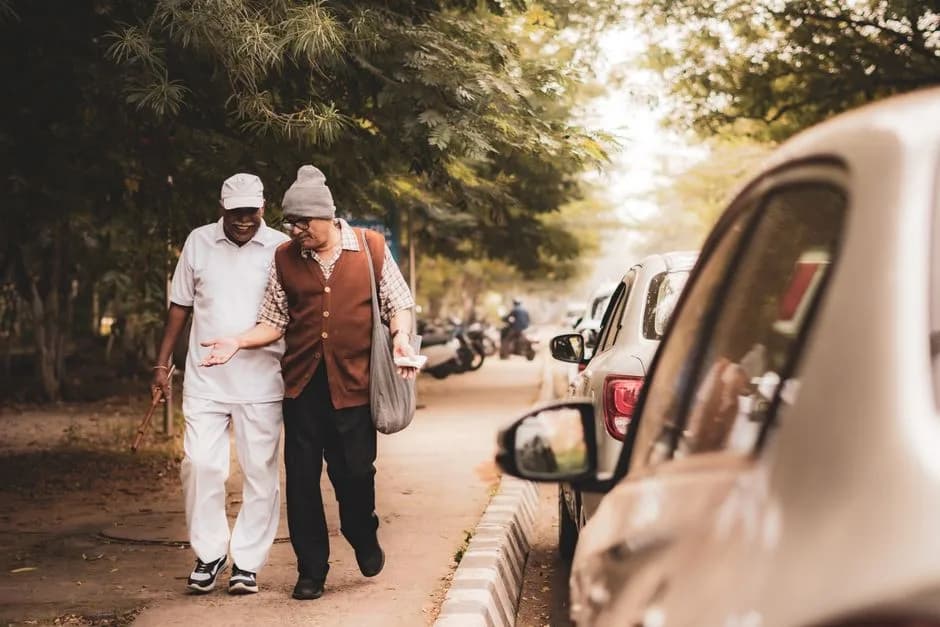
Safest, simplest, most accessible. No equipment. Low impact. Can be done anywhere. Aim for 30 minutes most days. Start slower if your parent is very sedentary.
Water exercise
Excellent for elderly. Buoyancy supports the body. Water resistance builds strength without impact. Warm water relaxes muscles. Classes designed for seniors exist at many pools.
Resistance bands and light weights
Build strength in arms, legs, core. Improve balance. Prevent muscle loss. Start with very light weight and focus on form.
Tai chi and yoga
Improve balance, flexibility, and body awareness. Reduce falls. Improve mental health. Many classes exist specifically for elderly.
Strength training
Two to three sessions per week, all major muscle groups. Preserve the muscle that otherwise disappears with age. Prevents frailty and falls. Can be done at home or in gym.
Flexibility exercises and stretching
Maintain range of motion. Prevent stiffness. Help daily tasks become easier. Should be part of daily routine.
Balance training
Specific exercises (standing on one leg, heel-to-toe walking, reaching movements) that train balance and reduce falls. Critical as balance naturally declines with age.
What to avoid
High-impact activities without preparation
Running, jumping, impact activities stress joints that are less resilient. If your parent has been sedentary for years, this is too much to start with.
Complex new movements without instruction
Learning complex patterns while moving stresses balance. Work with a trainer or instructor first.
Exercising alone when unstable
Falls happen. If your parent has balance problems, exercise near walls, with support, or with someone present.
Overambitious intensity
Your parent cannot do at 70 what they did at 40. Starting too hard leads to soreness, discouragement, injury. Start low, progress slowly.
Exercising through pain
Soreness after exercise is normal. Sharp pain, joint pain, chest pain, shortness of breath are not. Stop and see a doctor.
Getting started with exercise
Talk to the doctor first
If your parent has cardiac disease, joint problems, balance issues, or has been sedentary for years, medical clearance is important. The doctor can recommend what is safe.
Start small
10 minutes of walking is better than nothing. One session per week is a start. Increase gradually.
Find something your parent enjoys
If they enjoy it, they will continue. Walking in the park. Water aerobics with friends. Tai chi. Whatever keeps them moving.
Make it social
Exercising with a friend or in a group increases adherence. Your parent is more likely to show up for a class with friends than to exercise alone.
Remove barriers
If the gym is far, they will not go. If clothes are hard to put on, it slows them. Reduce friction. Make movement easier, not harder.
Track progress
"I walked 10 minutes today" feels better than "I exercised." Concrete progress motivates continuation. A simple log helps.
Celebrate consistency
The goal is not to be an athlete. The goal is to keep moving. Three walks per week for six months is a success. Consistency matters more than intensity.
Common barriers and solutions
"I am afraid of falling"
Fear is real. Work on balance first (Tai Chi, balance training). Exercise where your parent feels safe (near walls, with support, with someone present). Fear decreases as confidence increases. As balance improves, fear naturally diminishes.
"I do not have time"
Exercise does not require equipment, gym membership, or travel. Walking from the house. Stretching while watching TV. Bodyweight exercises at home. Small amounts throughout the day add up.
"I am too old"
Age is not the limit. Physical capacity changes with age but exercise improves capacity at any age. An 85-year-old who starts exercising becomes stronger and more capable than an 85-year-old who does not. It is not too late.
"I am already too weak"
Weakness is exactly why exercise helps. Inactivity makes weakness worse. Activity, even gentle, begins to rebuild muscle and strength. Starting is the hardest part. The improvement comes quickly.
"I have pain"
Certain exercises might hurt. But inactivity hurts more in the long term. Work with a physical therapist to find what works. Some movement is always better than no movement.
The conversation with your parent
"I notice you are moving less than you used to. I am concerned that without movement, you will become weaker and less able to do things you want to do."
"Can we find something you enjoy that keeps you moving? A walk together. A class. Something with friends. Something you like."
Listen to barriers. Address them practically. Make movement accessible and social.
"Starting is hard. But after a few weeks, you will feel stronger and more able."
Why exercise matters at the doctor visit
The doctor should ask about physical activity. Sedentary elderly are at high risk for all the complications of immobility. The doctor should recommend exercise as part of health management. If there are barriers, the doctor should help problem-solve.
Ready to support your parent's movement and independence?
Doctor visits should include discussion of safe exercise and movement. Professional companions at health visits ensure exercise recommendations are clearly explained and a realistic plan is established.
See how companion support works:
Safe, sustainable movement is achievable at any age.
The goal is consistency, not intensity. Three walks per week is success. Small improvements compound.
Frequently Asked Questions
Help your parent stay active and independent.
Discuss safe exercise with your parent's doctor. Arrange companion support for health visits to ensure exercise recommendations are realistic and clearly explained.
Presenza's care team writes practical guides for families managing elderly hospital visits and remote healthcare coordination.
Get our hospital visit checklist for families.
A practical guide to preparing for appointments, questions to ask doctors, and what to document. Free. No spam.