Families searching for city-specific service details can review our Kochi or Bangalore companion service pages.
Vaccination prevents serious disease in elderly.
After 60, immunity declines. New vaccines have become available. Vaccination strategy must change to protect against shingles, pneumococcal, flu, and other diseases.
Your parent says: "I had chicken pox as a child. Why do I need a shingles vaccine?"
Your parent says: "I do not get sick from the flu. Why do I need a flu shot?"
Your parent says: "I got a pneumococcal shot ten years ago. Do I need another?"
These are good questions. But the answer is different for elderly than for younger adults.
After 60, immunity naturally declines. Vaccines that protected your parent in youth offer less protection now. New vaccines have become available. Vaccination strategy changes.
Understanding this can prevent serious illness, disability, and death.
Why immunity changes with age
The immune system ages. This is not failure. It is biology. T cells (critical for immunity) decline in number and effectiveness. B cells (which make antibodies) work less efficiently. The immune system becomes slower to respond.
This is why elderly people get sicker from infections that younger people fight off easily. The flu that gives a 30-year-old a week of illness can put a 75-year-old in the hospital.
Vaccines work by training the immune system to recognize and fight a disease. In elderly, the vaccine must work harder because the immune system is slower to respond. This is why elderly need different vaccines than younger adults.
Shingles (Herpes Zoster)
If your parent had chicken pox as a child (almost all elderly had it), the virus is still in their body, dormant.
After age 50, the risk that this virus reactivates as shingles increases dramatically. By age 70, about 50 percent of people will have had shingles.
Shingles is not just rash and pain. It can cause permanent nerve pain (postherpetic neuralgia) that lasts for years or for life. It can cause vision loss (if it affects the eye), hearing loss (if it affects the ear), or paralysis of the face (if it affects the trigeminal nerve).
The vaccine (Shingrix) is two doses, two to six months apart. It is 97 percent effective at preventing shingles and 91 percent effective at preventing postherpetic neuralgia. This is one of the most effective vaccines available.
Even if your parent previously had shingles, the vaccine is recommended to prevent recurrence.
Recommendation: All adults age 50 and older should get Shingrix.
Pneumococcal (Pneumonia)
Streptococcus pneumoniae causes pneumonia, blood infection (sepsis), and meningitis. In elderly, this bacterium causes serious disease.
The pneumococcal vaccines (PCV15, PCV20, and PPSV23) protect against different strains. The recommendation changed in 2024 to make protection simpler: PCV20 or PCV15 followed by PPSV23.
If your parent had a pneumococcal vaccine years ago, they likely need an updated one because new and more effective vaccines are now available.
Recommendation: Discuss with doctor which pneumococcal vaccines are right for your parent based on age and health status. At least one dose is recommended for all adults age 65 and older, and at earlier ages if chronic illness is present.
Flu (Influenza)
Elderly should get a flu shot every year. The seasonal flu mutates constantly. Immunity wanes. A new vaccine is needed each year.
In elderly, regular flu vaccines (trivalent or quadrivalent) work but newer vaccines (high-dose flu vaccine for age 65+, recombinant flu vaccine) may work better. Talk to the doctor about which vaccine is best.
The flu causes not just misery but real complications: pneumonia, hospitalization, death. In elderly, these risks are significant. Annual vaccination is critical.
Recommendation: All adults age 6 months and older should get a flu shot annually. Adults age 65 and older should consider high-dose or recombinant vaccine.
RSV (Respiratory Syncytial Virus)
Until recently, there was no vaccine. New RSV vaccines for adults age 60 and older are now approved.
RSV causes respiratory disease that can be severe in elderly. In very elderly (age 75+) or those with chronic illness, RSV can cause serious pneumonia.
RSV vaccine is a single dose, newly available. If your parent has not had it, discuss with their doctor whether it is recommended.
COVID-19
The pandemic is not over for elderly. Vaccination continues to be important.
In elderly, the risk of severe COVID-19 remains significant. Updated vaccines are recommended annually, more often than for younger adults.
If your parent is vaccinated with vaccines from 2022 or earlier, an updated vaccine is recommended.
Recommendation: Discuss current COVID-19 vaccination status with the doctor.
Other vaccines to consider
Tdap (Tetanus, diphtheria, pertussis): Especially important if your parent is around infants. One dose Tdap, then booster Td every ten years.
Hepatitis A and B: If your parent is unvaccinated and traveling or has specific risk factors.
Meningococcal: If your parent is age 65+ or has certain conditions.
MMR: If your parent never had measles immunity documented.
The specific vaccines depend on your parent's age, health status, travel plans, and what diseases they previously had immunity to.
Getting vaccinated
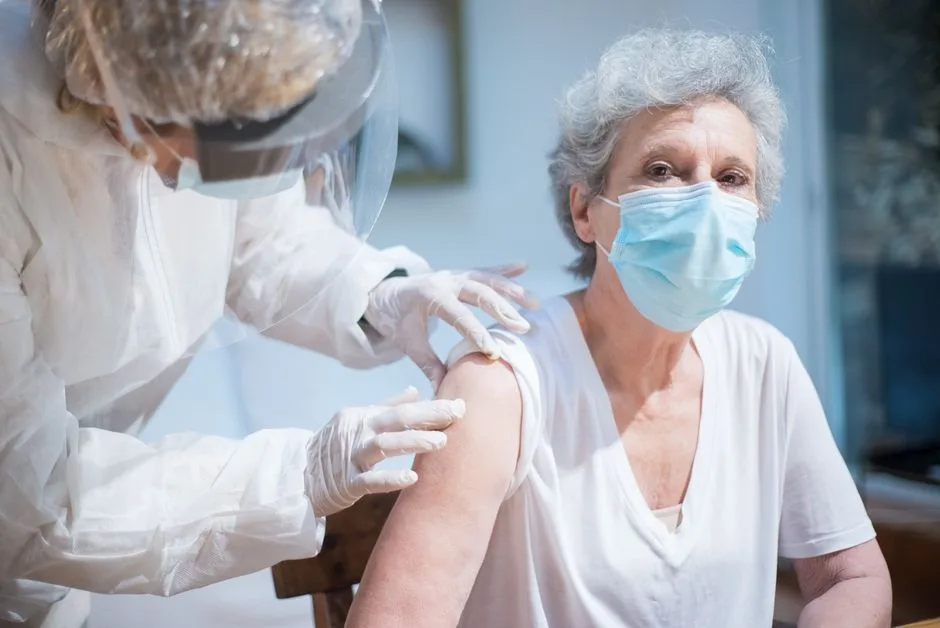
Most vaccines can be given at any visit to a doctor, pharmacist (many pharmacies offer vaccines), or public health clinic. No special preparation usually needed.
Some vaccines cause mild side effects: arm soreness at injection site, low-grade fever, tiredness. These are normal and indicate the immune system is responding. Serious side effects are rare.
If your parent has a severe allergy to vaccine components, tell the healthcare provider before vaccination.
A vaccination record for your parent
Ask the doctor or clinic for a complete vaccination record. Document:
- Vaccine name
- Date received
- Where received
Keep this record. When your parent sees a new doctor, bring the record. This prevents duplicate vaccines and ensures nothing is missed.
If your parent has had multiple doctors, vaccinations might be scattered across different providers. Consolidate this information.
The conversation with your parent
"We should make sure you are up to date on vaccines that protect against serious diseases common in aging: shingles, pneumococcal, flu."
"These vaccines prevent diseases that can cause hospitalization or long-term problems. It is worth doing."
"Let's talk to the doctor about what you need."
Frame it as maintaining health and preventing serious complications, not as an obligation.
Why vaccination is critical at the doctor visit
At health visits, the doctor should review vaccination status. Many elderly arrive with incomplete or unknown vaccination history. A full review happens rarely unless the doctor deliberately checks.
Ensure the doctor asks about vaccination status. Ensure written recommendations are made. Ensure your parent actually schedules and receives the vaccines.
Vaccination is preventive care. It prevents serious illness before it happens.
Ready to ensure your parent's preventive care is complete?
Health visits should include comprehensive vaccination screening. Professional companions at doctor visits ensure all preventive care recommendations are discussed and clearly documented so nothing is missed.
See how companion support works:
Review vaccination status now.
Many elderly have incomplete or unknown vaccination history. A complete review ensures nothing is missed.
Frequently Asked Questions
Ensure your parent's vaccines are current.
At health visits, ask the doctor to review all vaccinations due. Ensure recommendations are documented. Schedule appointments for any vaccines that are needed.
Presenza's care team writes practical guides for families managing elderly hospital visits and remote healthcare coordination.
Get our hospital visit checklist for families.
A practical guide to preparing for appointments, questions to ask doctors, and what to document. Free. No spam.