Families searching for city-specific service details can review our Kochi or Bangalore companion service pages.
Diabetes in elderly is manageable, but requires consistent care.
Regular monitoring, medications, diet, and exercise prevent complications and allow your parent to live well with diabetes.
Diabetes is one of the most common chronic conditions in elderly adults in India. One in four elderly has diabetes. Yet many manage it poorly: skipped medications, inconsistent monitoring, poor diet, and slowly worsening complications.
But diabetes in elderly is manageable. With your help, your parent can avoid complications and live well with diabetes. The key is consistent, informed management.
This guide covers what adult children need to know to help elderly parents manage diabetes effectively.
Why Diabetes Is Different in Elderly
Elderly patients with diabetes face unique challenges:
- Multiple medications: Often on 4-5+ medications plus diabetes drugs. Drug interactions risk increases.
- Cognitive changes: May forget to take medications or monitor blood sugar.
- Vision loss: Cannot read blood sugar meter or see food labels clearly.
- Mobility limitations: Cannot cook healthy meals or exercise easily.
- Reduced sensation: Cannot feel low blood sugar symptoms (hypoglycemia unawareness).
- Kidney disease: Diabetes damages kidneys; elderly often have reduced kidney function already.
- Heart disease: Diabetes and heart disease are intertwined; elderly often have both.
Standard diabetes care designed for younger adults does not work for elderly. Your parent needs tailored management.
Blood Sugar Targets for Elderly
Younger adults target fasting blood sugar less than 100 mg/dL. Elderly? Different story.
Recommended targets for elderly:
- Healthy, independent elderly: Fasting 100-130 mg/dL, after-meal less than 180 mg/dL
- Frail elderly or those with limited life expectancy: Fasting 110-150 mg/dL, after-meal less than 200 mg/dL
Why looser targets? Overly tight control causes low blood sugar (hypoglycemia), which is dangerous in elderly. Low blood sugar causes confusion, falls, heart attacks, strokes. A slightly higher blood sugar is safer than dangerously low.
Ask your parent's doctor what their specific targets should be. Do not assume standard targets apply.
Medication Management
Diabetes medications must be taken consistently. Yet elderly often forget or take incorrectly.
Common diabetes medications:
- Metformin: First-line, most common. Helps with weight and has cardiovascular benefits. Usually safe in elderly (but not if kidney disease).
- Sulfonylureas (gliclazide, glipizide): Older medications. Work well but risk of low blood sugar. Less preferred in elderly.
- DPP-4 inhibitors (sitagliptin, vildagliptin): Safer, lower risk of low blood sugar. Good for elderly.
- GLP-1 agonists (exenatide): Newer, very effective. Injection or oral. Good for weight loss and heart protection.
- SGLT2 inhibitors: Newer, protect kidneys and heart. Good choice for elderly.
- Insulin: Last resort if other medications not enough. Requires careful monitoring but necessary for some.
Medication management tips:
- Use a pill organizer labeled by day and time
- Set phone alarms for medication times
- Take medications with a meal (helps remember)
- Keep medications in one place, visible
- Review with doctor annually: Are all medications still needed? Can doses be reduced?
Common problems:
- Your parent takes double dose because they forgot they already took it
- Your parent stops medication because they feel fine
- Your parent takes medication incorrectly (with or without food matters for some)
Supervise medication taking. It is not insulting. It is essential.
Blood Sugar Monitoring
Checking blood sugar helps track control and catch problems early.
Who needs to monitor:
- If on insulin: daily, usually 2-4 times per day
- If on sulfonylureas: daily or several times weekly
- If on other medications: weekly or as doctor recommends
- If diet-controlled only: less frequent, but periodic checks help
How to monitor:
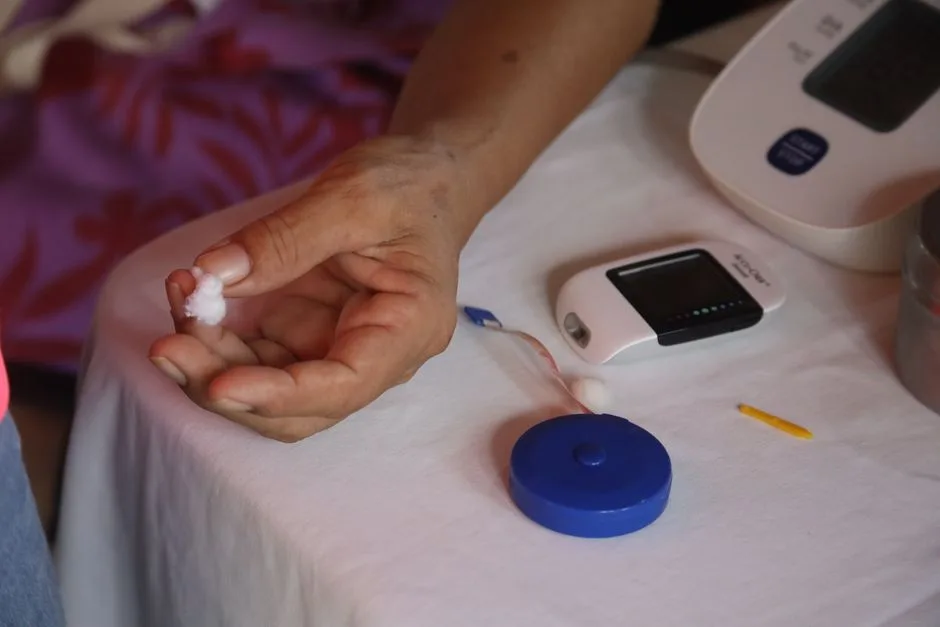
- Use a glucometer (blood sugar meter)
- Prick fingertip, apply blood drop to test strip
- Most modern meters give result in 5 seconds
- Record results (phone app, logbook, or notebook)
Challenges in elderly:
- Arthritis makes pricking fingertip painful
- Vision loss makes reading meter difficult
- Cognitive decline makes them forget to check
- Tremor makes blood drop fall off strip
Solutions:
- Continuous glucose monitors (CGM) painless, automatic readings sent to phone
- Large-screen meters easier to read
- You or caregiver does the monitoring
- Simplified schedule: check at same time each day (example: before breakfast daily, not scattered throughout)
Diet for Diabetic Elderly
Diet is as important as medication. Yet many elderly with diabetes eat poorly.
Principles:
- Whole grains instead of refined: Brown rice, whole wheat bread, oats
- Plenty of vegetables: Non-starchy vegetables do not raise blood sugar; fill half the plate
- Moderate protein: Helps keep blood sugar stable
- Limited sugar and sweets: Obvious, but also limit sugary fruits and juices
- Regular meal times: Skipping meals and then overeating causes wild blood sugar swings
- Adequate fiber: Helps with blood sugar control and digestion
Practical diet tips:
- Breakfast: Whole grain bread, egg, vegetables (avoids blood sugar spike)
- Lunch: Dal with whole grain rice and vegetable
- Dinner: Grilled fish or chicken with vegetables and whole grain
- Snacks: Yogurt, nuts, fruit (not fruit juice)
Challenge: Your parent may have lost appetite or taste. Food tastes bland. Eating feels like obligation, not pleasure.
Solution: Prioritize what they will eat over perfect nutrition. A parent who eats imperfect diet consistently is better off than one who avoids food because it is too "healthy."
Exercise for Diabetic Elderly
Exercise lowers blood sugar and improves insulin sensitivity. But elderly with diabetes often do not exercise.
Benefits of exercise for diabetic elderly:
- Lowers blood sugar for hours after exercise
- Improves insulin sensitivity (body uses insulin more efficiently)
- Strengthens muscles
- Improves heart health
- Prevents falls
Safe exercise for elderly with diabetes:
- Aerobic: Brisk walking, swimming, cycling. 150 minutes per week.
- Strength training: Weights, resistance bands. 2-3 days per week.
- Balance work: Tai chi, yoga. Prevents falls.
Important: Check blood sugar before and after exercise if on insulin or high-dose diabetes medications. Exercise causes low blood sugar sometimes.
Challenges:
- Your parent feels weak and does not want to exercise
- Joint pain or arthritis makes exercise painful
- Fear of low blood sugar during exercise
Solutions:
- Start small: 10-minute daily walk, build up
- Low-impact exercise: swimming is easier on joints
- Snack before exercise to prevent low blood sugar
- Exercise with someone (more motivating)
Preventing Diabetes Complications
Diabetes damages organs over time. Your parent's job is to prevent or slow this damage.
Common complications:
Kidney disease:
- Diabetes is the leading cause of kidney failure
- Check kidney function annually (creatinine, eGFR)
- If kidney disease develops, medication changes needed
- Some diabetes medications (metformin, SGLT2 inhibitors) require dose adjustment
Eye disease (retinopathy):
- Diabetes damages blood vessels in eyes, causing vision loss
- Annual dilated eye exams essential
- Good blood sugar control and blood pressure control prevent progression
- Caught early, treatable
Nerve damage (neuropathy):
- Diabetes damages nerves, especially in feet
- Causes numbness, tingling, pain, weakness
- Can lead to foot ulcers and amputation if not managed
- Prevention: good blood sugar control, foot care
- Annual foot exams important
Heart disease:
- Diabetes accelerates heart disease
- Elderly with diabetes often have silent heart disease (no symptoms)
- Annual EKG recommended
- Control blood pressure and cholesterol aggressively
Foot problems:
- High blood sugar impairs wound healing
- Numb feet mean injuries go unnoticed
- Small cuts become serious infections
- Prevention: Check feet daily, keep clean and dry, trim toenails carefully, wear supportive shoes
Managing Multiple Conditions
Many elderly with diabetes also have hypertension, heart disease, or kidney disease.
When multiple conditions exist:
- Blood pressure targets might change
- Kidney disease means medication dose adjustments
- Heart disease means specific medications (ACE inhibitors, beta-blockers)
- Coordinate between specialists or see internist coordinating care
Ask doctor:
- "What is my target blood pressure given my diabetes and heart condition?"
- "Do my kidney function results change my medications?"
- "What medications affect my diabetes?"
When to Seek Emergency Help
Some situations require immediate medical attention:
Very high blood sugar (hyperglycemia):
- Blood sugar greater than 300 mg/dL (confirmed by repeat check)
- Symptoms: severe thirst, frequent urination, fruity breath, confusion
- Risk: diabetic ketoacidosis (DKA), a life-threatening emergency
- Action: Go to emergency room
Very low blood sugar (hypoglycemia):
- Blood sugar less than 70 mg/dL with symptoms
- Symptoms: shaking, sweating, confusion, difficulty speaking, loss of consciousness
- Risk: seizures, heart attack, stroke, death
- Action: If your parent is conscious, give 15 grams fast sugar (juice, glucose tablet, honey). Recheck in 15 minutes. If unconscious or no improvement, call emergency
- Prevention: Teach your parent and caregiver to recognize symptoms early
Diabetic foot ulcer or infection:
- Any cut or sore on foot that does not heal
- Signs: redness, warmth, pus, spreading area
- Risk: Infection can progress to amputation
- Action: See doctor immediately, do not delay
Annual Checkup for Diabetic Elderly
Your parent needs comprehensive annual assessment:
Tests to do annually:
- Fasting blood sugar and HbA1c (3-month average blood sugar)
- Kidney function (creatinine, eGFR)
- Urine protein (sign of kidney damage)
- Cholesterol (lipid panel)
- Liver function
- Eye exam (dilated, with ophthalmologist)
- Foot exam (should be done annually by doctor)
- Blood pressure
- Weight
Questions for doctor:
- Is blood sugar control adequate?
- Do medications need adjustment?
- Are there early signs of complications?
- What should my parent's targets be?
- How often should we check blood sugar?
This comprehensive approach prevents surprises and catches complications early.
The Bottom Line
Diabetes in elderly is manageable. Control does not have to be perfect. It has to be consistent.
A parent who checks blood sugar regularly, takes medications reliably, eats reasonably well, and exercises when able will avoid most diabetes complications and live well.
This is what good diabetes management looks like in elderly: sustainable, realistic, and effective.
Complete Diabetes Care for Your Parent
Diabetes requires ongoing medical supervision and family support.
See our guide to preventive health checkups for annual screening protocols.
For families managing elderly parents with diabetes, our caregiver support service helps coordinate specialist visits, medication management, and glucose monitoring.
Prevention of complications is more important than perfect blood sugar.
Annual screening for kidney disease, eye disease, and foot problems catches complications early, when treatable.
Frequently Asked Questions
Get comprehensive diabetes management for your parent.
Message us on WhatsApp. We help coordinate diabetes care, monitoring, and specialist visits for elderly parents.
Presenza's care team writes practical guides for families managing elderly hospital visits and remote healthcare coordination.
Get our hospital visit checklist for families.
A practical guide to preparing for appointments, questions to ask doctors, and what to document. Free. No spam.